
When I was young, I thought “What’s real?” was a question reserved for philosophers, poets, and people who buy things with tassels.
Then life introduced me to the Vietnam War, grief, AA, family faith differences, and the steady humiliation of being wrong both out loud and in my own head.
Now, at 84, I think what’s real is what you ask when your best story, your ego driven fiction about yourself stops working. I can just pretend so long and reality steps in. What have I learned? Reality, in my experience, is not a life coach. It doesn’t clap when you show up. It just stands there, calm, stubborn, and mostly unimpressed.
But it does leaves clues. Often, for me, it has been the two-by-four variety delivered by mentors and people I value and respect. Subtlety, it turns out, is mostly wasted on me.
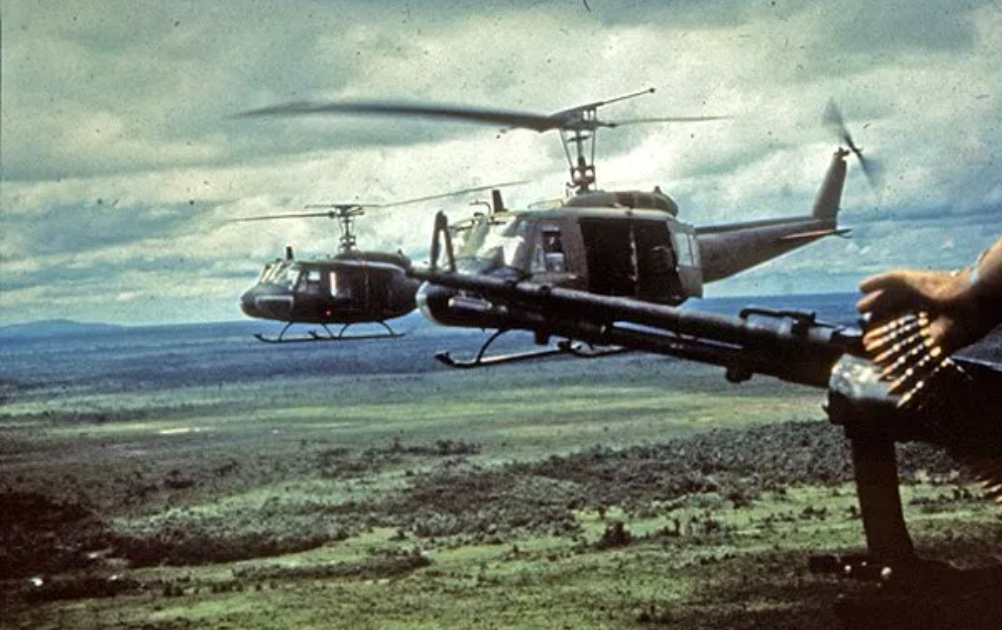
In a helicopter, in a war, you can’t pretend you’re anywhere else. The engine won’t allow it. My ADD vanishes. The rotors chop the air into hard pieces. Every bolt and rivet seems to announce … No sleeping allowed in this class. Pay attention.
You’re not alone up there. We fly as a team, another helicopter close enough that you can see it clearly, like a partner in a two-man drill. It’s a strange comfort, that second aircraft. Two birds, one purpose. In my young mind it almost feels organized. Almost fair. Like if you do your job, you’ll get through it.
Then reality does what it does. A 51 caliber hits the other helicopter. One second, it’s there with us. The next second the world flips, it is on fire, rolls, and goes upside down.
Here’s a part that stays with me, often in my dreams. Even as it falls, the door gunners’ tracer rounds are still firing. Bright red lines now reaching up into open sky, like the machine doesn’t understand the rules have changed.
It looks insane. It looks impossible. I’m in shock. My mind says … This can’t be real. But it is. And then it hits me, clean and final, the way certain truths arrive in war … My friends and comrades are dead. Not “might be.” Not “probably.” Not “I hope they make it.”
Dead.
That kind of knowledge doesn’t come in through the mind first. It comes in through the body. The stomach drops. The mouth goes dry, skin goes cold. The mind tries to bargain for a few seconds. It tries. It fails. Then another thought punches through, just as hard. They won’t be at the evening briefing.
That’s when it turns from “something that happened” into a hole in the world. At the end of the day, there’s always a briefing. Somebody’s always late. Somebody’s always joking. Somebody’s always complaining. You count heads without even thinking about it, because that’s what humans do in war. We count. We check. We hope.
But those men won’t walk in. There will be empty chairs. And that will be louder than the briefing. No late entrance. No grin. No tired nod. No voice from the back of the room.
And then the next thought arrives, the one that makes your throat tighten. It could just as easily have been me. I’m thinking … How will I last a year?
I’m scared shitless. That’s one kind of reality … Blunt. Physical. Final.
The lesson sticks. The body doesn’t lie. Your mind can write a ten-volume explanation of why you’re fine. Your body sends a short message that needs no editing … No way, Jose.
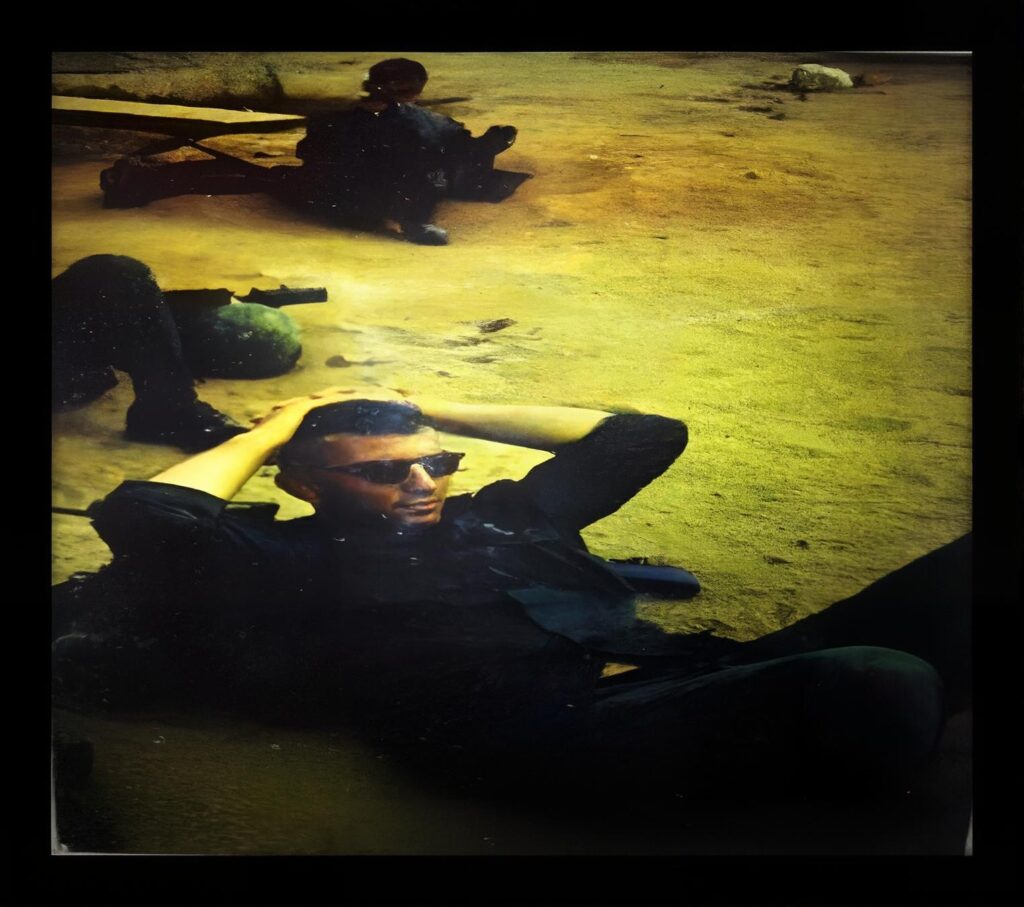
I used to believe that reason ran the show. That’s a young man’s belief, right up there with “I can change people” and “this will only take five minutes.” Here’s what I learned the hard way: Emotion outranks reason. Emotion is the battalion commander. Reason is the staff officer writing the memo afterward explaining why the decision was “strategic.”
I don’t know this when I’m young. I think I’m making rational decisions. Meanwhile my emotions are driving the bus, and my logic is sitting in the back taking notes. It sounds funny until you see how much human history is no more than that. Not only that, much history is questionable as it is written by the victors.
Part of my truth, part of what’s real for me, is that when I’m young, my self-esteem is in the basement. I’m not talking about teenage insecurity, the kind that disappears when you get a better haircut. I mean the deep kind. The kind that makes you feel like you’re always behind. Always proving. Always one mistake away from being exposed as a fraud. So, I compensate. I try to be tough. I try to be funny and likable. I try to earn worth the way a poor man earns bread— one day at a time, never sure there will be more
tomorrow.
War is gasoline on that fire. It doesn’t just test courage. It test’s identity. If you’re already carrying a low opinion of yourself, you will accept terrible deals just to feel safe, false certainty, tribal belonging, rigid beliefs, any story that promises you won’t be small anymore. That’s not a moral failing. That’s a human brain trying not to drown. It’s also why I’m suspicious of loud certainty. Much of the time it isn’t truth. It’s pain in uniform, a politician speaking, or a preacher praying.
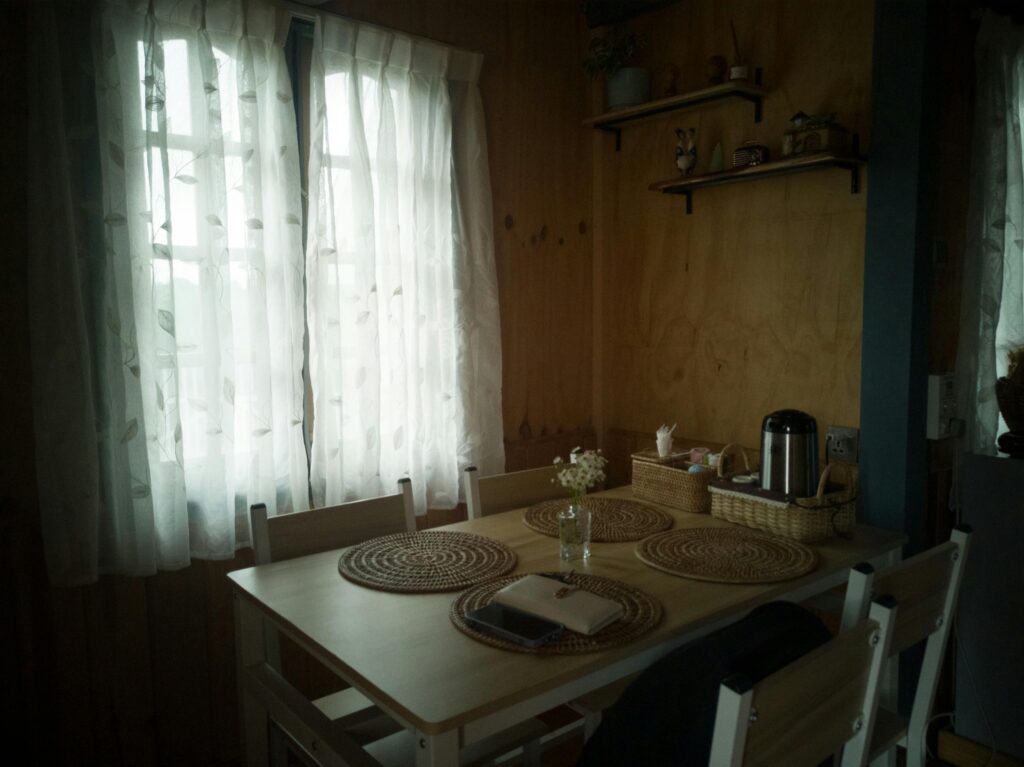
Years after the war, I’m in my grandmother’s house, my Yia Yia’s kitchen. No rotors. No bravado. No young men practicing courage while sweating through it. Just a small table, coffee, something simmering, and an icon on the wall that’s been there so long it looks like it grew out of the plaster.
My grandmother doesn’t argue about God. She doesn’t debate, doesn’t perform, doesn’t corner you with theology like a salesman trying to hit quota. If you ask her, “What’s real?” she probably doesn’t answer with a philosophy. She just puts more food on your plate. “Eat Georgie! Eat … There is plenty.” She touches your shoulder as she passes, one second of contact that says … You’re here and everything is okay. Sit still. Eat.
I used to think that was really naïve. I had a courtroom brain. I wanted proof, evidence, a final ruling. I wanted the universe to hand me a signed affidavit. But age improves you, if it doesn’t kill you first. I start to see she’s practicing something sturdier than argument …
Not the idea of God, but:
The life of attention.
The habit of care.
Her faith isn’t a claim. It’s a posture. It’s how she feeds people and listens. It’s how a simple room can feel like it’s holding you up. If there’s holiness, or a “God” worth using that word for, I suspect it looks like this– ordinary love, repeated until it becomes a way of being. This feels real, not because I can prove it, but because it changes what happens in the room. Reality sometimes arrives wearing an apron.
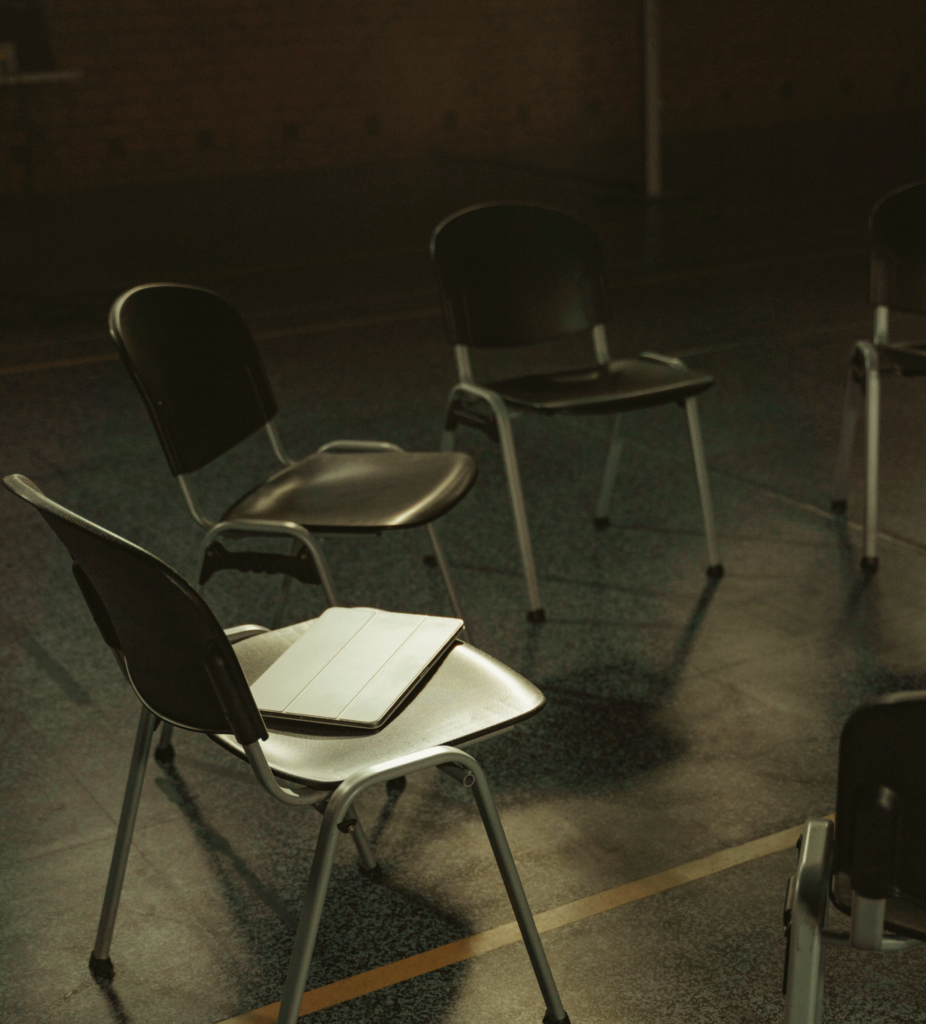
Then come the AA rooms that nobody brags about on vacation. Folding chairs. Bad coffee. People who aren’t trying to impress you because they’re too busy trying to stay alive. In that room you hear a rare thing: truth without performance. Straight from the gut. No spin. No branding. No heroic origin story with background music. Just: “Here’s how I was.” “Here’s what happened.” “Here’s how it is now.”
You learn quickly that the biggest lies in life aren’t usually told to other people. They’re told to oneself. And one of the bravest sentences a person can say is: “I don’t know why I’m like this, but I’m done lying about it. It may not be all my fault I’m here, but it is all my responsibility to fix it.”
I never was much for spirituality, but what I found here is different. It’s a strange kind of spirituality I’d never encountered before with less incense, less tithing, less redeemed sinner philosophy, and more real accountability. A place where people tell the truth because pretending finally got too expensive. That’s where my definition of “real” shifts from cosmic to practical …
Reality becomes responsibility.
Reality becomes responsibility and making amends.
Reality becomes the next right thing.
Reality becomes what holds up under pressure.
And I learn a line I trust– “One day at a time”.
What’s real is what you can live. If your “truth” can’t survive Tuesday traffic, a bad phone call, and a lonely Friday night, it might not be truth. It might be fake as costume jewelry. A lot of what we call “real” is just a story we repeat until it feels like furniture. We do it with politics. With religion. With family history. With ourselves.
We take a handful of experiences, some wounds, some victories, and stitch them into a narrative: This is who I am. This is how the world works. Then we defend it almost maniacally, like it’s our skin. But life love, failure, and time humiliate our stories. War especially humiliated mine. I don’t say that in despair. I say it with relief. Because if reality is bigger than my story, I’m not trapped in my first draft. I can revise. I can make a new plan. Reality doesn’t always destroy your narrative. Sometimes it just edits it. Hard.
Here’s another thing that’s real … I’m 84, and the old low self-esteem doesn’t run my life the way it used to. It still knocks on the door sometimes, old habits die slowly, but I have learned to recognize it as weather. At 84, I don’t need to win every argument. I don’t need to look smart. I don’t need to be the toughest guy in the room. I can say “I don’t know” without panic. I can admit what I feel without turning it into law. If there’s grace in aging, it might be this — the desire to prove yourself can finally get tired. And when it does, something quieter appears. Something like peace. Or at least a truce.
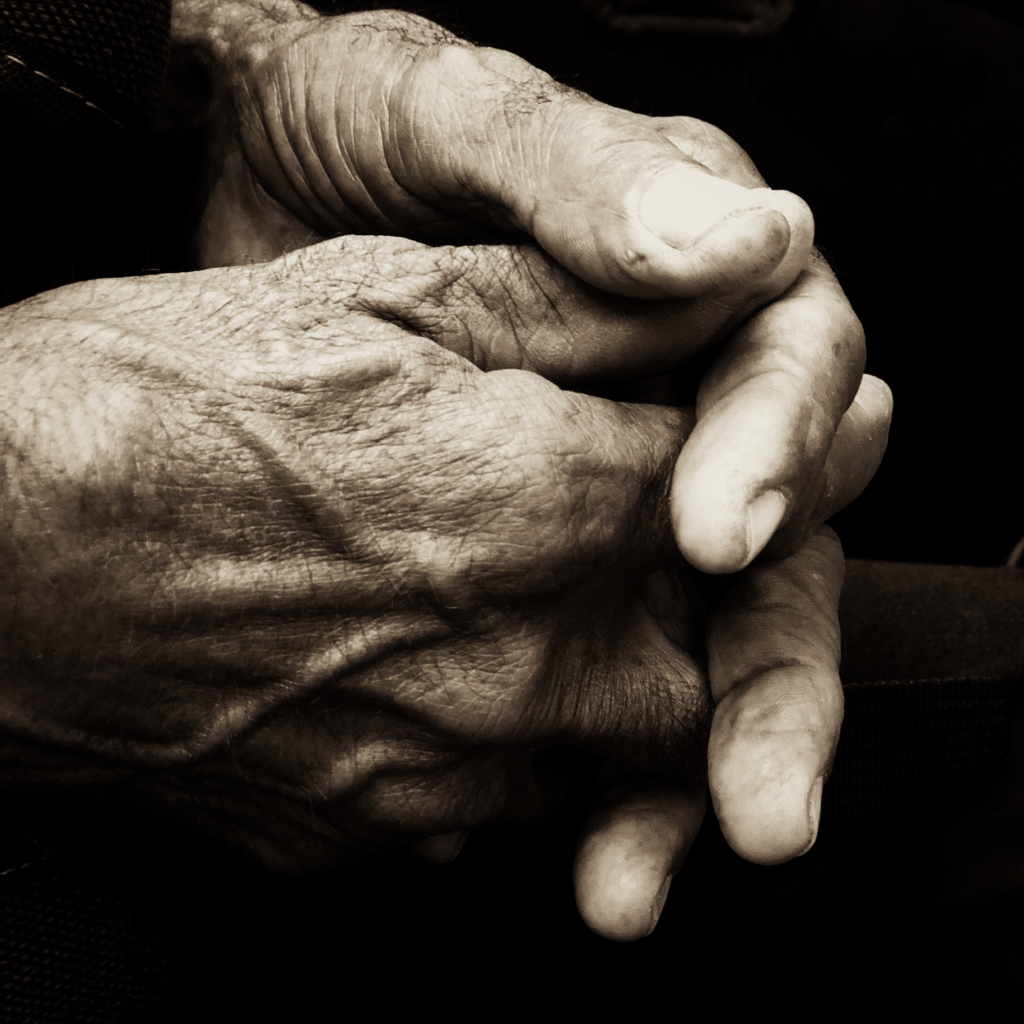
When I look back, I see my life braided out of strands I never would’ve chosen on purpose.
Fear and beauty.
Violence and tenderness.
Faith and skepticism.
A grandmother’s kitchen.
A helicopter’s roar.
A room of folding chairs.
And here’s one thought I carry carefully. I don’t wave it like a flag. Annaka Harris offers an image. Consciousness, she suggests, might be less like a lightbulb that turns on in a brain and more like a field, something we move through. I can’t prove that. I’m not trying to. I don’t know what I don’t know. That’s for sure! But it keeps me honest. If it’s even partly true, none of us owns consciousness. We share it. That might be the braid. This is what I know …
Reality is not just what exists.
Reality is what changes you when you stop pretending.
Reality is what’s left when the story breaks.
Then something else shows up. A little humility. A little wonder. A little less hunger to be right. So, if you ask me now, “What’s real?” I’ll answer the best I can.
It is a journey. What’s real is what wakes you up. What’s real is what you can live.
What’s real is what makes you kinder, not louder.
If there’s something holy in this world, I don’t think it’s hiding in the loudest certainty. I don’t think it’s owned by any one religion either. I think it’s in the braid.
Attention. Honesty. Awe.
That’s enough. Reality won’t mind. Reality rarely does.





This piece is beautiful and brimming with truth. Thank you!
I love this. So much wisdom and heart. My husband was in Vietnam as well, but Agent Orange got him and he passed away 4 1/2 years ago. Thank you for sharing this. I’m going to keep your name because I would love to read your memoir.
LOVE your writing. Thank you. My late husband was a door gunner on a Huey approx ’65-’67. I look forward to your memoir.