
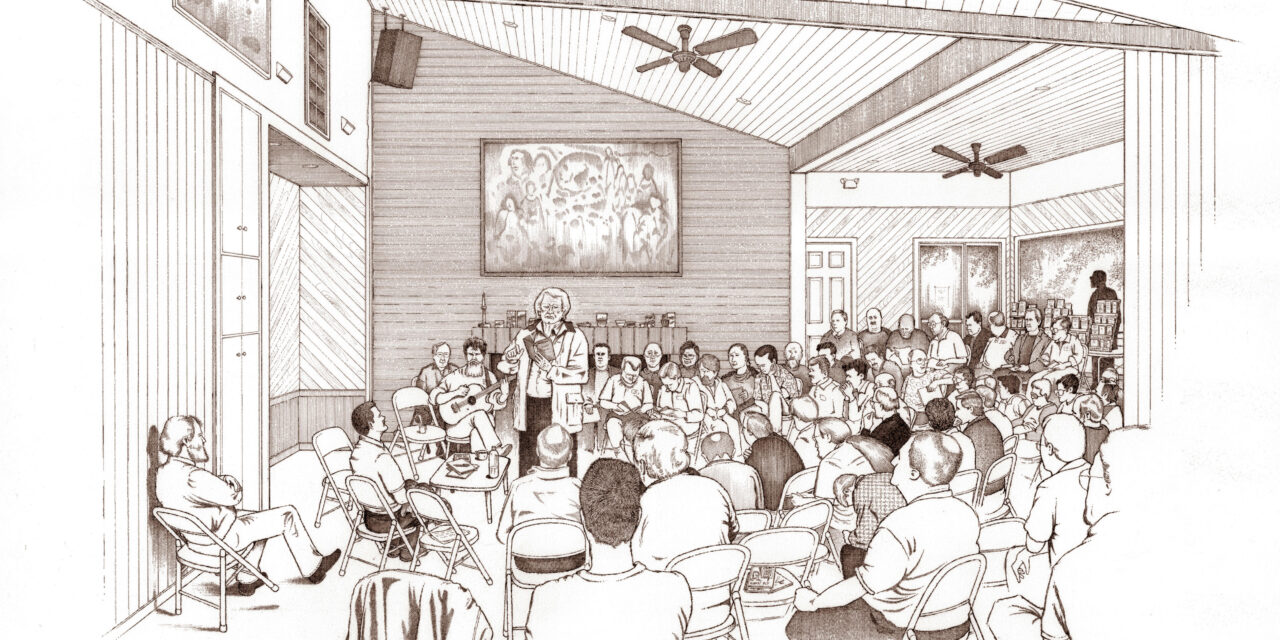
A few years ago, I had the pleasure of attending a three-day conference with the late Robert Bly (1926-2021). It was my intention, as an author and artist, to capture the event in both written and visual form. What follows is my translation of Mr. Bly’s presentation in drawings and words.
Resonance
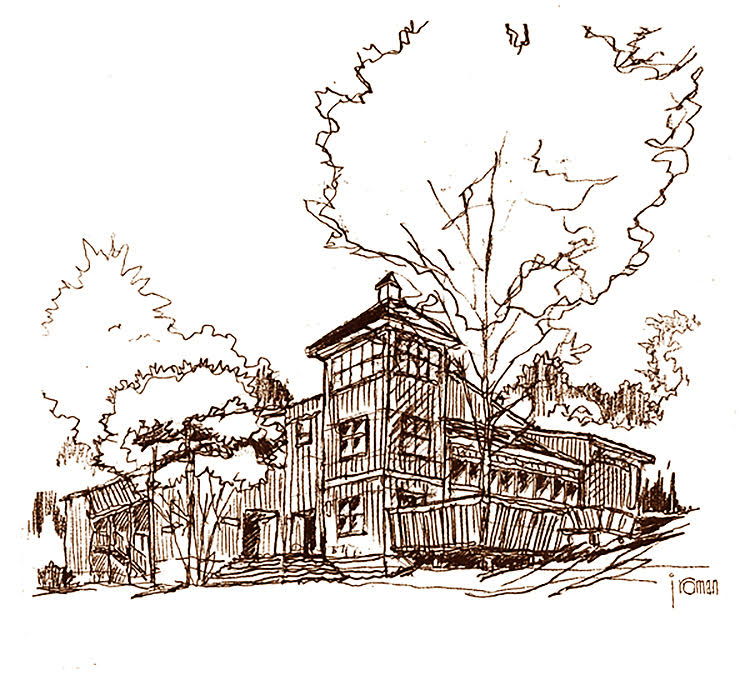
“The purpose of the mammal brain is to resonate with another being,” began the poet, storyteller, and philosopher Robert Bly to a gathering of forty during a weekend conference held in the Rowe Camp and Conference Center’s Grace Jordan Hall in Western Massachusetts. Bly, author of numerous books on poetry, mythology, and philosophy, is best known for his outspoken and sometimes controversial criticisms of social, corporate, and political injustices.
Like musical instruments, he explained, living souls strike chords that may or may not vibrate or resonate with others. A mother resonates with her newborn infant, for example, but in some cases a mother with emotional or personal problems does not resonate with her child. A man may resonate with a certain woman. A man may resonate with another man, a woman with a woman, or a human with an animal. “Our inner self seeks that which it can resonate with,” Robert noted, “and it must resonate to stay healthy and alive.”
This was the starting point for the weekend’s work. Many offered their ideas of what they considered resonance to be: love, compassion, care, nurturing, etc. Robert added, “Somewhere deep in the brain is a musical string which, when struck, will resonate and send out a vibration that is picked up by another brain living on the same vibration.”
To Robert, “inner self” refers to the ethereal aspect of life, which is precisely the domain poetry represents; non-verbal thoughts and images set to a limited vocabulary. As Robert recited some of his own poems from memory as well as those of others, and as he read passages from his books, it became evident that he was clearly resonating with every soul in the room.
Grandiosity
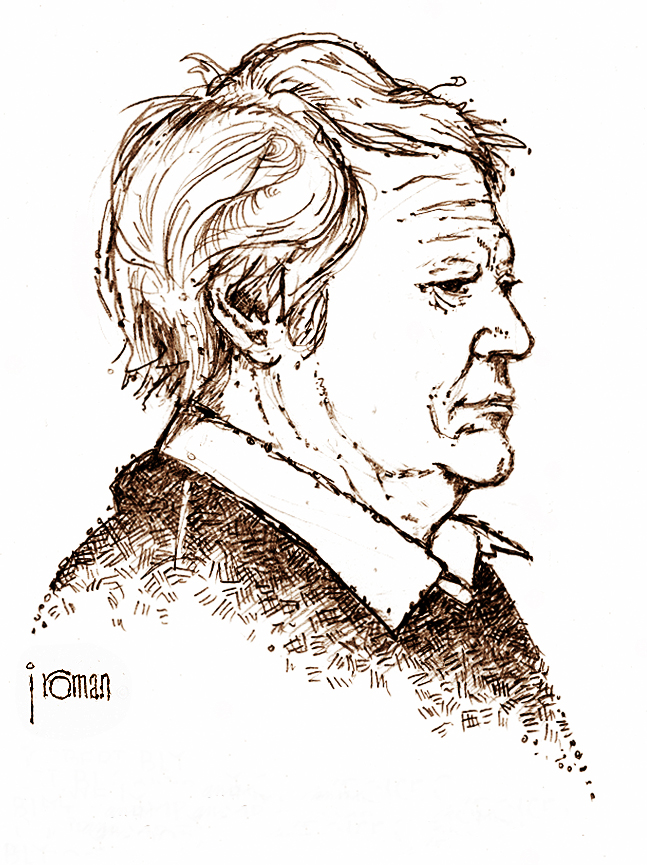
Grandiosity of the psyche was another concept Robert explored during the retreat. Grandiosity gives a person confidence. Too much grandiosity turns into egocentricity, and not enough becomes low self-esteem. While grandiosity enables us to accept the positive aspects of our own personality, Bly warned, “waiting in the hall is Grandiosity’s twin brother, Utter Worthlessness, who is anxious to reveal and dwell upon every bad thing that has ever been muttered about us.” Finding a balance between the light and shadow sides of our grandiosity, then, is the key.
But beyond individual grandiosity, Robert warned about the dangers of group grandiosity when people believe they are superior to other individuals who are not part of their particular circle. Positive resonance ceases in such situations, and Robert expressed concern about the horrors that such groups perform against other human beings. This dark dynamic can even surface within a family, or on a larger scale, it can manifest in political systems, religious organizations, or entire countries that galvanize and deem other parties, religions, or cultures as “the enemy.” For them, anyone outside their private belief system is seen as less-than-human. When the hostile words or actions of such groups are justified, their self-righteousness is exposed.
“Live your grandiosity by yourself,” Robert advised, “and match it to something you do. Don’t be content to be ordinary. Excel at something.” Grandiosity can be expressed in art, poetry, writing, or craft. Grandiosity that remains fixed with the ego remains unconscious. It lacks an outlet for expression, leaving it vulnerable to being taken over by a group. In his bestseller, Iron John, Robert stressed, “Our work then is to free ourselves from family cages and collective mindsets.”
Going Underground
By the midpoint of this forum, something had changed in the air. Forty people uprooting and sharing buried memories and emotions created an unusual, electric energy that now needed to be guided and given a home. This is when Robert the storyteller stepped in. He told a favorite tale of his, an important story called “The Devil’s Sooty Brother.” It’s an ancient myth that describes the inner work required when someone’s resonance and grandiosity have been derailed by cruelty, betrayal, or some form of separation. The story tells of a soldier who is discharged from the army with nowhere to go and nothing to do (the discharge symbolic of a painful event, rejection, or loss).
One day, the soldier encounters the Devil, who offers him a job (the Devil in this case is not Satan, rather an inner guide who knows we have work to do on our injury). The soldier is instructed to go to an underground cave for seven years and keep several very large pots boiling, after which time he would be paid very well. The exact fee for his work, however, was not discussed. The soldier accepted the job and went underground (a metaphor for the personal unconscious). The Devil’s final instructions stated that under no circumstances should the soldier ever look into the boiling pots.
But one day, when the Devil was not around, the soldier decided to look into the pots anyway. In the pots, he was shocked to see the bodies of all the people who had ever caused him hurt or pain during his lifetime. Now, knowing exactly what was in the pots, the soldier had no trouble at all keeping them boiling good and hot for the next seven years. (This aspect of the story represents the work we do when we are in therapy, talking out the pain connected with difficult personal relations.)
At the end of the seven years, the Devil complimented the soldier on a job well done, and he gave the soldier his wages. To the soldier’s dismay, his pay only amounted to a big bag filled with all the ashes from underneath the cooking pots (we take the ashes of the psychological work we’ve done with us when we leave the therapist’s office). Very disappointed, the soldier left the underworld walking slowly and dragging his bag of ashes on the ground behind him.
But once back in the outer world, something quite marvelous happened. The soldier discovered that all the ashes in his bag had miraculously turned to pure gold. (Not only is the work done in therapy very valuable, but also within that work lies the secret of our own unique gifts.)
Inner Gold
Everyone enjoyed this story, and many found similarities to their own lives. There was enough wisdom amongst the crowd to also see that the tale was not about blaming or punishing others, but had more to do with the release of one’s buried anger or sadness surrounding personal sufferings. “Everyone has these wounds to greater or lesser degrees,” Robert said. “Something as simple as never receiving a blessing from your father is an injury that needs to be burned out.” To ignore the psychic injuries in our lives is to ignore the silent harm they do to our relationships, to our careers, and to our health. This is a very old story, and yet it still holds real truths for all who can accept its message.
“Seven years in a myth can represent twenty or thirty years in real life. The inner work is never quite done,” Bly explained. “It’s about cooking and finding the true flavor of your life. It’s not about confronting those who have hurt us or about attacking our abusers. The boiling work can be done privately, verbally in your room. Thoreau did his cooking in his writing.” Robert added, “Other ways to cook include artwork, music, poetry, journal writing, sculpture, and crafts.”
The ancients knew all this, but somewhere in our modern culture, we’ve lost it all. Over-indulgence of television, sporting events, video games, movies, rock concerts, etc., all get in the way of the real work we were sent here to do, to paraphrase from Bly’s The Sibling Society. Robert suggested that all present should, “accept the wounds you’ve been given, and the powers that be will notice you.” A Chippewa Indian poem from Robert’s The Rag and Bone Shop of the Heart, says the same thing, only a little differently:
Sometimes I go about pitying myself,
And all the time
I am being carried on great winds across the sky.
Returning to the World
During that weekend, Robert Bly had become more than a teacher. He was a cook who had set out forty large pots under his visitors, and for three days, he kept those fires burning with poetry, storytelling, lectures, and conversation. “The job of the artist, the job of the musician, is to increase the heat,” he said. And the people did cook. Their own stories, poems, and songs emerged as they voluntarily added fuel to their own pot fires. “Boil me some more. Hit me with the skimming spoon. I can’t do this by myself,” cries a passage from a similar Rumi poem about the cook and the chickpea. More poetry from Bly served as more wood for more burning and more boiling. No one wanted it to end. The last session on Sunday ran an hour and a half longer than scheduled and closed with Robert leading an ancient African chant honoring the ancestors of everyone in the room. All the chanting voices became one voice…one resonance.
For three days, the sun had shone brightly in those Massachusetts mountains. But as the event came to a close, a pouring rain began outside as if all the fires under the pots were being extinguished. While the people mulled about and said their goodbyes, Robert quietly walked around the room and gathered up the ashes from underneath each person’s pot. Then, one by one, he sent them on their way. Forty people left Grace Jordan Hall that afternoon. Forty people, walking slowly and dragging their bags of ashes on the ground behind them.
All illustrations by John Roman.
In memory of Robert Bly (1926-2021)






John, your post leaves a trail of gold for the seeker on the road to enlightenment. Robert Bly’s brilliance is captured in your words and drawings.
Thanks so much, Arlene!
Thank you so much for sharing this with us. It’s beautifully written and I got so much out of it. Very profound.
Thanks, Laurie!!!