
I make coffee every morning, and I almost always read fiction while I drink it. This isn’t a productivity habit or a discipline. It’s comfort. Coffee and stories have belonged together for as long as I can remember.
It started with my Gramps.
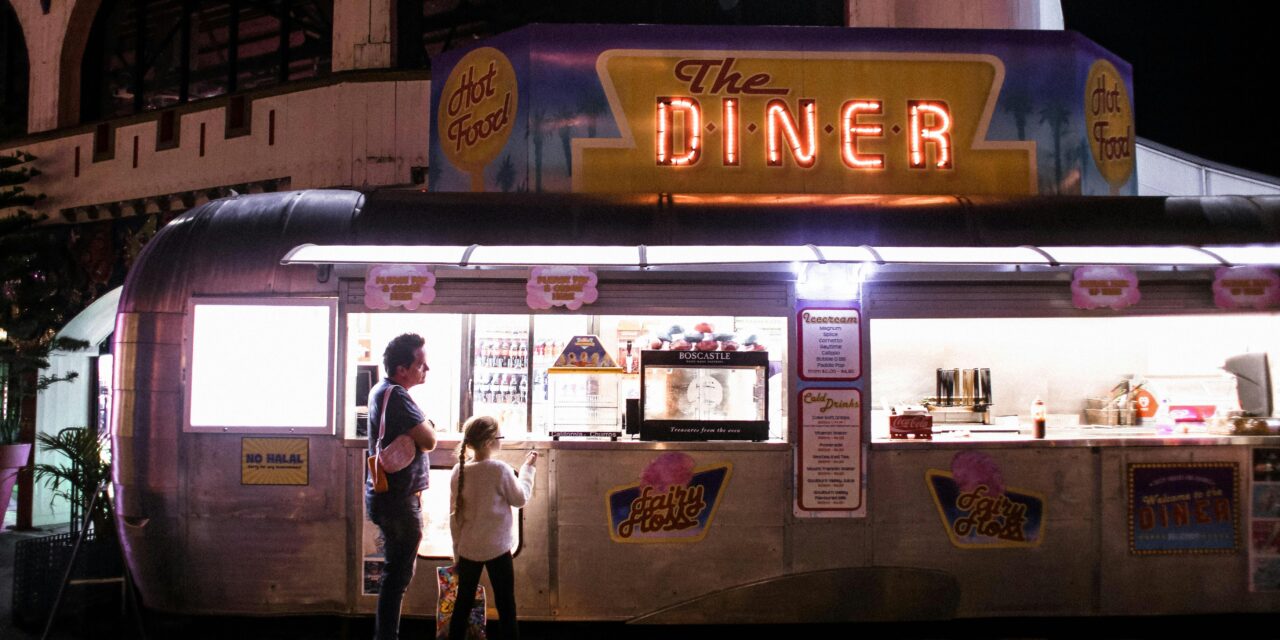
The first coffee I ever tasted was sitting beside him at the breakfast counter of the Benjamin Franklin drugstore in Camp Springs, Maryland. I was small enough that my feet didn’t touch the floor. He ordered a cup of coffee for himself and asked the waitress for an empty cup for me.
When the coffee came, he poured half of his into my cup. Then he added three packets of sugar and a pour of cream, stirring carefully. He handed it to me and lifted his own cup, black and unsweetened. We tapped them together, a small ceremonial ping between porcelain rims.
Then he opened a book.
That summer, before I entered third grade, my Gramps took me out for coffee most Saturday mornings. He wanted me to read better. More than that, he wanted me to be confident reading out loud. He bought me flash cards. We practiced sounding words out. I drank my half-cup of coffee, ate pancakes and crispy bacon, and felt like I was in heaven.
The waitresses at the counter became my audience. When I read a phrase aloud, they clapped. I learned that words could be spoken into a room and received kindly.
By the end of that summer, I had advanced significantly in my reading.
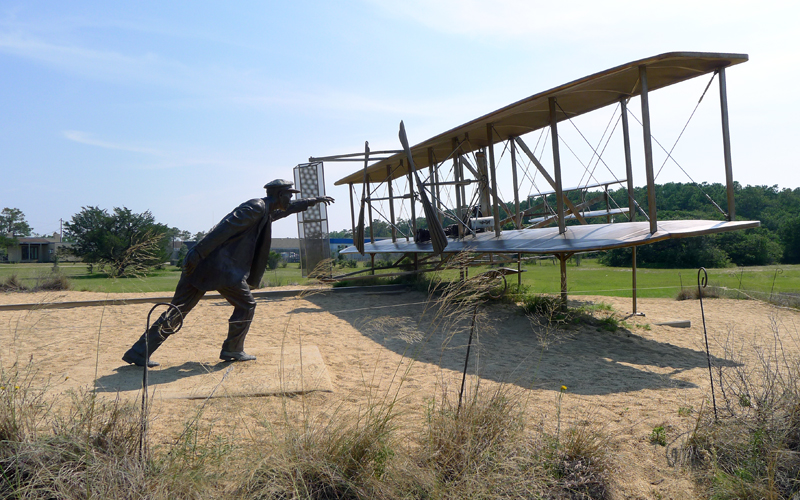
In the middle of third grade, we were assigned a two-page report. We could choose any topic. I chose the Wright Brothers of Kitty Hawk, North Carolina. My Gramps was a retired Major General in the Air Force, and he loved telling me about flight. We used to stand together in the Smithsonian, staring at the plane the brothers built, imagining the courage it took to leave the ground for the first time.
When I told him my topic, he didn’t suggest library books or help me outline. Instead, he took my little sister Dale and me out of school for four days. We climbed into his Lincoln Continental and drove for nearly five hours to Kitty Hawk.
We walked the museum and the surrounding grounds. The wind was constant, insistent. We stayed the night and drove back the next day, the trunk full of tchotchkes and brochures. I carried the silver Wright Brothers museum pamphlet with me like proof that I had been somewhere important.
I wrote the report when we got home. My Gramps read it and helped me a little. I got an A. I still have it. Three penciled pages on the Wright Brothers, with “A+” written in red at the top by my teacher, Ms. D’Ambrosia, who always smelled like rose perfume and wore her frosted blonde hair swept into a beautiful bun secured with a pearl barrette.
Years later, when my Gramps died, we flew back to D.C. to be there. I slept in his downstairs bedroom. Across the hall was the basement he had filled with Nancy Drew and Hardy Boys mysteries, shelved carefully so my sisters and I could “check them out” for a week at a time when we visited.
I was going through his old Samsonite briefcase, which sat open on his bed. In one of the pockets, I found the nearly twenty-year-old silver Wright Brothers brochure. He had kept it all those years.
I still have the briefcase. The brochure still sits in the same pocket. I also have the silver Coleman travel coffee thermos he carried on that trip to Kitty Hawk. When my own children were young, I filled it with coffee every time we went somewhere new.
Years later, coffee took on another meaning.
As a hospital chaplain, one of the holiest phrases I ever used was this: Why don’t you go get a cup of coffee.
I said it quietly, often standing in doorways or at the foot of hospital beds. I said it to families who had been keeping watch for more than twenty-four hours. Widows. Mothers. Fathers. People who were afraid that stepping away meant abandoning the person they loved.
I never meant just coffee. I meant a pause. A step outside what had become a kind of limbo-space, where time thickens and breath feels rationed.
Sometimes the family needed that break. Sometimes, quietly, the patient did too.
More than one patient told me they were ready to die, but did not want to do it in front of the people they loved. Fathers and husbands said this most often. I don’t know if there is a scientific explanation, but it is something hospice workers notice again and again: people sometimes wait for a moment of privacy to die. Sometimes this happens in tandem with a family telling the patient it’s okay to go, that they will be all right. Some patients hold on until they hear those words. Many people used their final moments the way they had used their lives, trying to be generous, trying to protect the people they loved from one more hard thing.

Families often carried guilt if their loved one died while they were not in the room. I should have stayed. I shouldn’t have gone. Grief fastens itself to the smallest absences.
So sometimes I offered them something else to hold.
If they were willing, I suggested bringing a photograph. A picture of themselves, or their children, or a pet. I helped them slide it inside the pillowcase, tucked underneath, where the patient’s head rested.
“Now they’ll be sleeping on your love,” I would say. “You’re still here, even if you need to take a break.”
It felt like a small ritual. Like tucking someone in. A way of saying: You are not alone. And neither are we.
My Gramps lived with multiple myeloma for four years. He was seventy-two when he died at Andrews Air Force Base Hospital. I was not there.
My mother told me that near the end, he asked her and my oldest sister to go get a cup of coffee. She didn’t want to leave. She stood in the doorway and said, “I love you, Pops.” He said, “I love you too, Dale.”
They went anyway. They sat with their coffee. When my mother heard the alarm, she knew it was his room.
For years, she believed it was the last gift he gave her.
Every morning, when I make coffee and open a book, I think of that breakfast counter. The Lincoln Continental. The wind at Kitty Hawk. The brochure still tucked away. I think of how coffee has always meant learning to stay for a while, and then learning how to leave.
When I told families to go get a cup of coffee, I wasn’t asking them to leave. I was inviting them to trust that love did not disappear when they stepped out.






This is a very important piece of writing that I really enjoyed reading. Thank you for sharing.
Thank you I’m glad it was meaningful to read.
Such touching memories. Heart filled.
Thank you so much.
I agree with Heather’s comment-important peice of writing. One of the few peices on this site so worth highlighting. It is never just about the coffee. It is about about that liminal space, that pause.
Thank you much for your comment.
Thank you. I think there are many beautiful pieces on this site and am glad mine resonated with you.
I loved this essay. It was warm and loving.
Thank you so much.
Thank you for evoking a happy tear on this Summer’s solstice day.
Hi Chris, I’m so grateful the piece was meaningful to you and happy Solstice.
Today is the Solstice. It would have been my mother’s 94th birthday.
During chemo, she was on a very restricted diet. At one point she said, “I’d give anything for a strong cup of black coffee and a glazed donut.”
It broke my heart that I was unable to provide that for her.
She died a few weeks later, finally succumbing to breast cancer.
And for nineteen years now, every solstice — her birthday — I celebrate her with a glazed donut and, of course, a strong cup of black coffee.
Thank you for this beautiful, touching meditation, and helping me so perfectly to honor my dear mother — with cup of coffee in hand. ☕️
Dawn,
Thank you for your beautiful note and what a wonderful way each year to honor your mom. My cup of coffee is sending your cup of coffee love..
Nettie