Long before doctrines of original sin crystallized into Western theological orthodoxy, early Christian authors envisaged spiritual life less as radical re‑creation and more as return—recovery, restoration, and realignment with the wholeness intentionally woven into human nature. For these thinkers, the soul did not emerge as a blank page or a fundamentally corrupted entity; it bore capacities for love, reason, and communion that could be obscured but not annihilated. Renewal was not the invention of something new, but the awakening of what was always latent.
Latin writers described this movement with the phrase converti ad Deum—“turning back to God”—a term capturing the interior pivot of the will and heart toward what had been forgotten or set aside. They also invoked reconciliatio, the restoration of right relationship; reparatio and restitutio, repair or restoration; and occasionally renovatio, especially of the Spirit (renovatio Spiritus Sancti). In Greek, New Testament and patristic texts emphasized metanoia, a transformative change of mind or heart, and anakainōsis, renewal, primarily in moral exhortation. Salvation as wholeness appeared under sōtēria, implying not escape but full alignment of self, community, and God.
Renovātus—used here interpretively—is the perfect passive participle of renovāre, “renewed” or “having been renewed.” Though not a technical category in the earliest Christian corpus, renovātus helps illuminate an enduring insight: human beings are recoverable. Wholeness is not something abruptly bestowed from without nor something constructed apart from lived context. It is a recovery of integrity through grace, ethical attention, and disciplined life. It is the activation of capacities always present but often dormant.
Consider Origen of Alexandria (c. 185–254). In De Principiis and other writings, he develops the idea of apokatastasis, restoration to primordial harmony, suggesting that rational beings can journey through moral and spiritual states toward God—an ascent that is both ethical and teleological. For Origen, even the soul’s entrapment in matter and suffering plays a remedial role, fostering return rather than eternal exile. Restoration is not a haphazard add‑on, but the culmination of a process of moral schooling in which even punishment serves as medicine to awaken the soul to its original orientation toward the divine.
Augustine of Hippo (354–430), often associated with doctrines highlighting human sinfulness, nonetheless writes in his Confessions of a soul yearning for wholeness and of divine assistance in reclaiming the life rightly lived. In one of his most poignant lines he prays, “Restore to me the joy of your salvation, and uphold me with a willing spirit. Then I will teach transgressors your ways.” Here the Christian life is not the annihilation of self but the return of joy through recovery of relationship with God.
For Gregory of Nyssa (c. 335–395), renewal is an ascent without end—an “epektasis” of growing into God—where purification gradually draws the soul back toward wholeness. In his On the Soul and the Resurrection, he describes purification as a refining process, like gold refined by fire. Such fire is not an expression of divine vengeance but a purifying presence that gradually removes what is alien to the divine image in us. In other passages, he speaks of a “restoration to the ancient state,” apokatastasis, where all creatures, purified of what is contrary to God, give thanks to Him.
John Cassian (c. 360–435), writing from the monastic context of the Egyptian deserts, focuses on habits and disciplines that shape interior life. For Cassian, renewal happens through prayer, watchfulness, and ethical formation: not instant transformation, but the gradual re‑orientation of body, mind, and will toward the divine presence in daily life. His emphasis on iterativity—persistent effort—underscores that renewal is lived and practiced, not merely declared.
Across these figures, renewal is healing and return—not replacement or annihilation. It expresses a continuity between who we have been, who we are, and who we are becoming; the soul “turns back” rather than being scrapped and rebuilt from scratch.
This ancient impulse toward return resonates with other traditions. Stoic philosophy sought inner alignment through virtuous attention to what is within one’s power. Buddhist awakening frames freedom from suffering as a return to ethical clarity and mindful presence. Hindu moksha emphasizes liberation through recognition of the self’s essential nature, and many Indigenous practices aim at restoring harmony within self, community, and environment. These analogies highlight a deeply human yearning: not for self‑erasure, but for repair—a movement toward coherence that respects history and context.
Importantly, renewal in early Christianity was never merely interior. Communities embodied wholeness through ethical action: distributing resources to widows and orphans, mediating disputes, and engaging civic life. Spiritual renewal was inseparable from social responsibility. The early church recognized that the soul’s restoration was a visible reality in how persons treated one another. Today’s restorative justice movements and community healing initiatives reflect that same insight: wholeness cannot be disentangled from relationality, community, and social repair.
Renovātus presupposes recoverability. Recovery is fragile, contested, and ongoing; it may unfold slowly, falter, or take unexpected forms. This stands in contrast with later Western emphases on radical sin and inherited guilt, which foreground rupture and metaphysical break. While some contemporary traditions emphasize being “born again” as a decisive event, renovātus emphasizes continuity, disciplined practice, and the gradual reclaiming of capacities. Renewal is a way, not merely a point in time.
Yet early Christian anthropology was never monolithic. Renovātus represents one interpretive stream—an image of human beings as recoverable through participation in grace and ethical life. It coexisted with other voices that stressed human frailty and radical dependence on the divine. But what unites them is the sense that renewal is neither purely interior nor strictly individualistic. It unfolds in community, in history, in relationships—with God and others.
In a culture that equates change with reinvention and novelty, renovātus offers a different image: renewal as return. Not self‑erasure, but realignment. Not annihilation, but restoration. It is a quiet turning toward a wholeness we were always capable of inhabiting, situated in personal, social, and historical realities, aware of human fragility yet persistent in aspiration.
To imagine renovātus is to picture a vessel slowly mended: not broken beyond repair, but thoughtfully rejoined, its cracks filled, its form honored and recovered. It is the prodigal child returning, not as someone entirely new, but as one reclaiming the home and identity already gifted. Augustine’s plea in Confessions invites faithful attention to that moment of interior longing: Restore to me the joy of your salvation, a prayer for wholeness, not obliteration.
Renewal is not the construction of a radically new identity, but the restoration of integrity worn thin by life’s fractures. Whether in personal healing, community work, or ethical engagement, framing renewal as return underscores patience, relationality, and continuity. It invites us to care for what already exists, to tend what is wounded, and to participate in the slow work of healing.
In our contemporary moment, marked by crises of identity, fractured community bonds, and ethical disorientation, renovātus invites a vision of recovery grounded in practice and presence: a turning back, an awakening to wholeness already woven into the fabric of our being.
Author’s note: Renovātus is the perfect passive participle of renovāre, meaning “renewed” or “having been renewed.” While renovāre and renovātiō appear in later theological texts, the participial form renovātus is used here interpretively to capture the conceptual sense of returning to wholeness and restoration in early Christian thought.
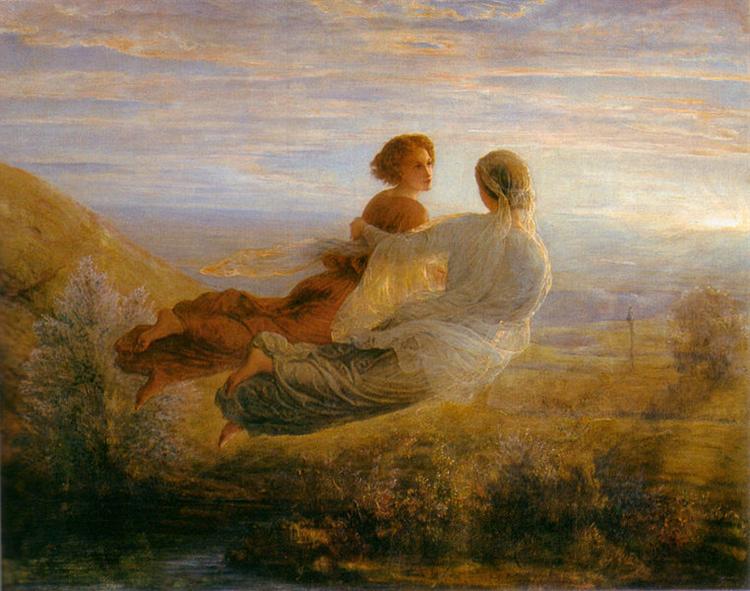
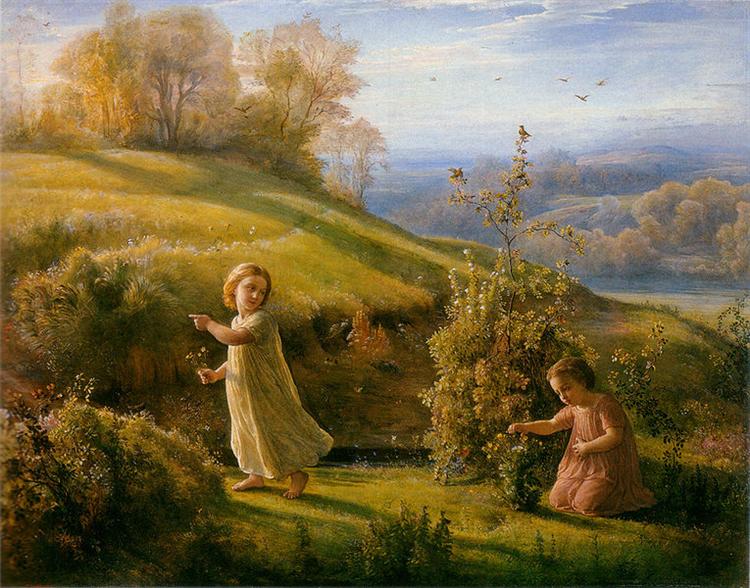
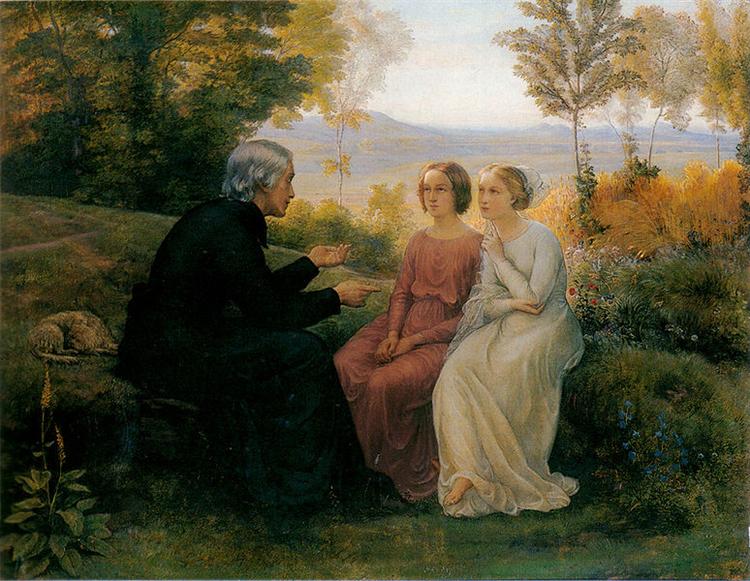
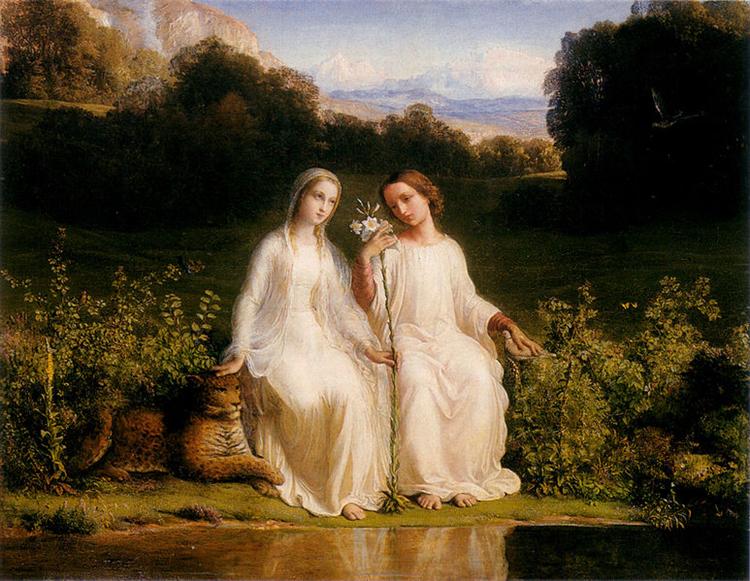
Paintings by Louis Janmot (1814-1892), from his series “The Poem of the Soul” depicting the soul’s journey through Earthly life as one of remembering its true spiritual nature.