

“What did Jung see in magic?”
It was about this time last year that the question haunted me. As a recovering pastor—recovering from addiction, control, and the belief that I could fix all my past mistakes—I found myself unraveling. But not into chaos. Something sacred was coming undone. I’d spent the last couple of years devouring books—from Dostoevsky and Nietzsche to Eckhart Tolle and Carl Jung. I wasn’t deconstructing Christianity to walk away—I was watching it split open and deepen. God was becoming more real, and it was wrecking me.
My theology wasn’t dying—it was getting louder, rougher. My understanding of the Bible wasn’t falling apart; it was becoming more honest. The contradictions were clues, the ruptures were invitations. Around Easter 2024, I started going back to churches—“research,” I told myself—trying to see if this unkillable thing inside me was faith or just old residue. I wanted to know what was wrong with American Christianity, and what was wrong with me. And as any addict knows, it was a lot. Studying helped. Thinking saved me. I was tired of being tired, but the books, at least, didn’t lie to me.
Somewhere in that season, magic kept showing up. Not stage magic, not wish-making, but something ancient and real. Jung had studied it for a reason. There was something in ritual, archetype, and intention that kept calling me back.
My girlfriend is a witch. She works with Lilith. That’s never been an issue for me—if anything, it’s been a strange mirror. One night, I was reading Jung. She was at her altar. She lit a candle for Lilith, burned a leaf, and said something quiet. Nothing dramatic. But between what I was reading and what I was witnessing, something cracked open. I realized: we were both doing the same thing. Submitting to something larger than ourselves. Letting go. Surrendering. Whether you call it God or goddess or shadow or source, real transformation starts with real humility.
That’s what people miss. Whether it’s a Christian at the altar or a witch at her shrine, what matters is the surrender, the encounter, the willingness to let go of your narrative and meet something wild and true. What I saw in her wasn’t rebellion—it was reverence. And somewhere in this space, between Jung and Jesus, between ritual and ruin, I found Lilith.
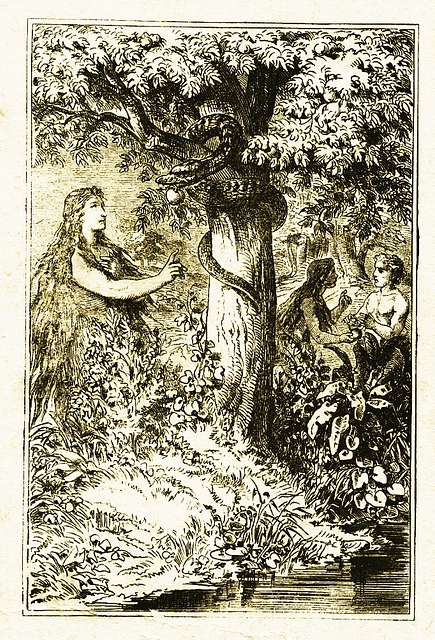
The Split: Lilith and Eve
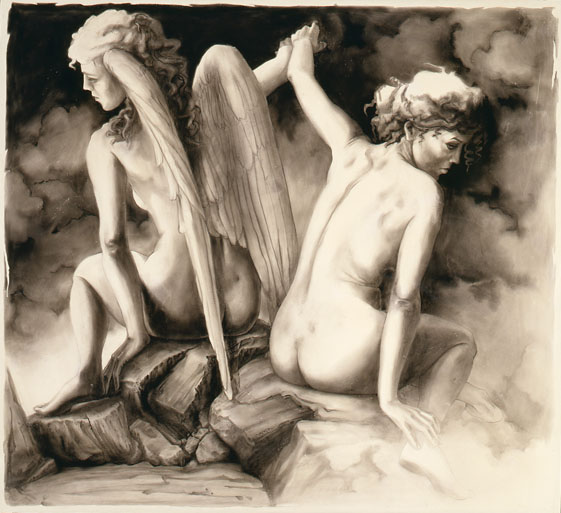
Eve and Lilith: two names, two destinies, two halves of a single wound. If Eve is the mother of all living, Lilith is the mother of all exiles. Their stories, set in motion by the same dust, are not opposites but echoes—each representing a path that women (and men) have been forced to choose between: obedience or exile, blessing or blame, visible or invisible.
To understand the fracture at the heart of Western consciousness—between men and women, sacred and profane, what is blessed and what is banished—we must confront not only Adam’s story, but the split between Eve and Lilith. This split is not only historical; it is psychological, theological, and deeply personal. And it is still unfolding.
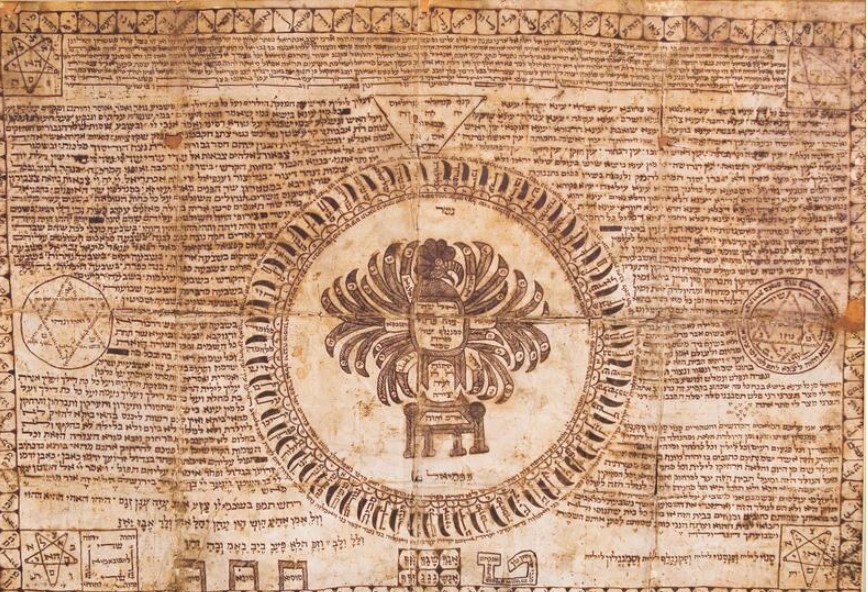
Lilith: Not Just Archetype, But Reality
Lilith is not a metaphor. She is a theological and psychological riddle, embedded in ancient texts, encoded in cultural repression, and alive in the split image of the Divine. She is whispered in Isaiah, inscribed on Mesopotamian bowls, feared by Talmudic rabbis, and now reclaimed by those—especially women—who were erased or deformed by the traditions that named her a demon. Like the serpent, she was never just evil. She was never just one thing. She is the shadow, and the shadow always begs for integration. Her very ambiguity makes her powerful: neither fully divine nor fully demonic, she exposes the flaw in dualistic thinking.
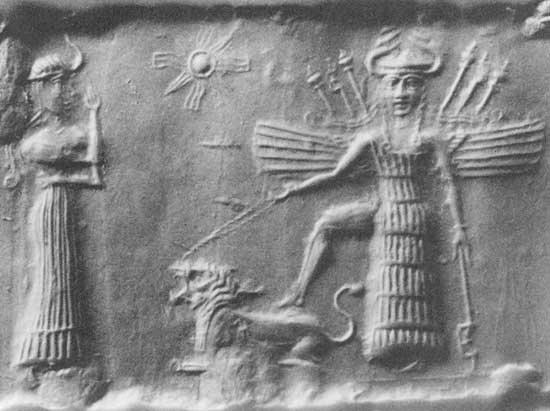
Her earliest manifestations in the ancient Near East show her as a wild feminine force—Lilītu, wind-spirits who moved between wilderness and home, civilization and chaos. She wasn’t born evil. She was pathologized. Her evolution reveals what James Hillman would call the “shadow of psyche”—what gets deemed sick when it threatens the dominant order. That’s what happened to Lilith. Theological development didn’t misunderstand her. It needed her gone to protect the story. And yet she remains, scrawled on bowls and amulets, warded against yet never forgotten—because the shadow cannot be exiled without consequence. It haunts.
Even Israelite ritual hints at this deeper root. In the Tabernacle, twelve showbread cakes were consumed weekly before Yahweh. Jeremiah condemns cakes baked for the Queen of Heaven (Jer. 7:18; 44:19), but one wonders what older, mystical traditions that act descended from. Ritual ingestion before divine presence. Offerings to the feminine, or what the masculine feared.
Depth Psychology and the Feminine Shadow
Barbara Koltuv, in The Book of Lilith, argues that Lilith appears in therapy and dreams not as chaos, but as a suppressed wellspring of power, energy, and autonomy. She writes, “Lilith is the ancient name for the dark goddess or dark aspect of the feminine. When she is repressed and rejected, she may become a powerful enemy, but when she is recognized and integrated, she becomes a source of strength.” Koltuv presents Lilith as the symbolic return of the cast-out feminine, the denied truth, the rage that cannot be exorcised because it is a valid response to disempowerment. In Jungian terms, Lilith represents the dark face of the anima—the autonomous, erotic, fiercely independent spirit in both women and men. Her presence in the psyche signals the soul’s hunger for honesty, sovereignty, and spiritual wholeness.
John Sanford, in The Invisible Partners, reveals how both men and women become entangled in the archetypal splits of Eve and Lilith—not as opposites, but as mirror wounds. Men often project the feminine onto external partners, splitting desire from devotion, power from purity. Women internalize the same divide, learning to distrust their own desire, strength, or sexuality in order to be deemed lovable or safe. But no one escapes the fracture. “The unlived lives of the parents haunt the children,” Sanford writes. These splits are not just roles we adopt—they’re ghosts we carry. And they don’t leave until we stop exiling parts of ourselves. Integration isn’t about becoming perfect—it’s about becoming whole. It’s about naming the inner Lilith and inner Eve, not as enemies, but as estranged siblings in need of reconciliation. Not one to choose, but both to bless.
This dynamic sustains what systems theorists call complementary pathologies—not just between people, but within each person. The split becomes a loop: we project what we refuse to face, then punish what we’ve projected. We exile parts of ourselves and call them dangerous in others. Until the wound is named and the fragments welcomed, the cycle repeats—relationships collapse, identities contort, and the soul stays fragmented. The wound doesn’t close through purity or performance. It heals when we stop running from the parts of ourselves we were told not to love.
Myth and Midrash: Lilith’s Older Story
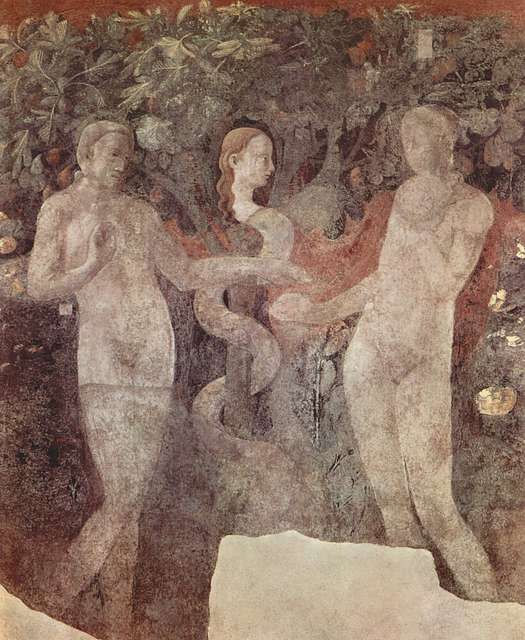
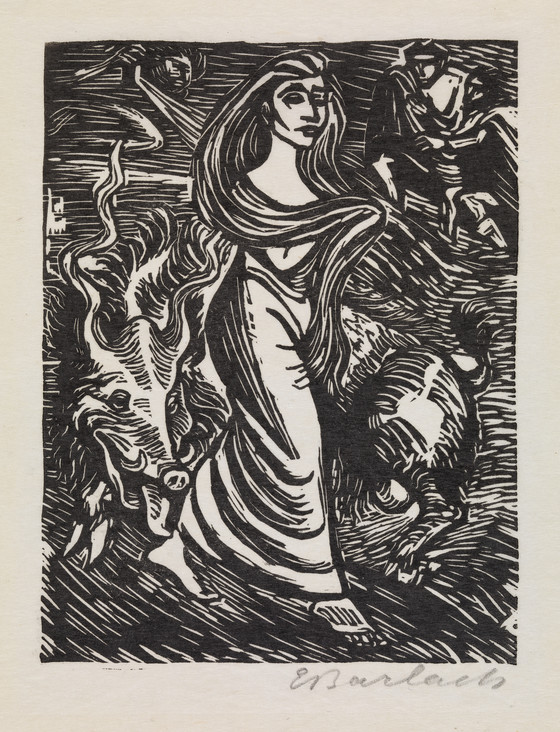
The Lilith of the Midrash isn’t a side character. She is introduced in the Alphabet of Ben Sira not as a mythic abstraction, but as Adam’s equal—formed from the same earth and infused with the same breath. When Adam tried to dominate her sexually, she refused and invoked the sacred name of God—an act so profound that it disrupted the entire theological scaffolding of patriarchal creation. She did not leave Eden because she was banished; she chose exile over submission. This invocation of the divine name is crucial—it reorients her flight not as rebellion against God, but as rebellion against a distorted image of God. In doing so, she represents the first autonomous theological act recorded in the tradition: to flee the false in pursuit of the holy. She was Adam’s first wife—made of the same clay. Her refusal to submit sexually and her invocation of the divine name before fleeing Eden was not sin—it was sovereignty. She leaves, not to escape God, but to refuse a God created in man’s image.
She becomes every woman labeled too much, too wild, too free. Every archetype split and then punished. She is the breath that says “no.” And every religion that couldn’t bless her has paid the price in fragmentation and shadow.
The Theological Thread
This isn’t just myth. It’s gospel.
Paul writes in Galatians 3:28, “There is neither male nor female, for you are all one in Christ Jesus.” That’s not political correctness. That’s mystical anthropology. The New Creation is androgynous in spirit, united in love, reconciling what patriarchy split. In Christ, Lilith isn’t erased—she’s welcomed. Her exile ends. She comes home.
Jesus shows this in how He treats women—He doesn’t fragment them into archetypes. He restores their full humanity. He lets the bleeding woman touch Him. He defends the adulteress. He listens to the Samaritan woman. He is unafraid of Lilith’s daughters. And that’s the gospel: not that the demon is cast out, but that she’s seen. Not that the wild is tamed, but that it’s healed.
Mystics have always known this. Teresa’s interior castle. John of the Cross’s Dark Night of the Soul. The journey is through wounds, not around them. Lilith is the wound. And the invitation.
The Shadow Work of Faith
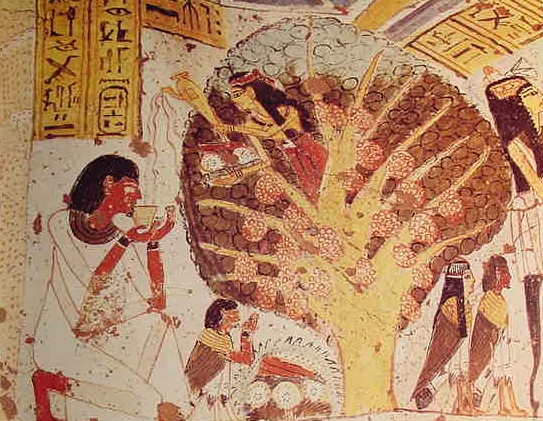
Christianity has long warned about “idolatry,” but I’ve come to see that idols are internal—projections of unintegrated shadow and autopilot ego. Even God can become an idol. Lilith isn’t the problem. Our refusal to face her is. She is the part of us we were told to banish—the sexually alive, spiritually sovereign, emotionally honest self.
Magic—real magic—isn’t a power trip. It’s about control and surrender, about knowing what you can and can’t do, and then accepting both. It’s not all that different from prayer. The real distinction is whether you’re hiding from your god or confronting it.
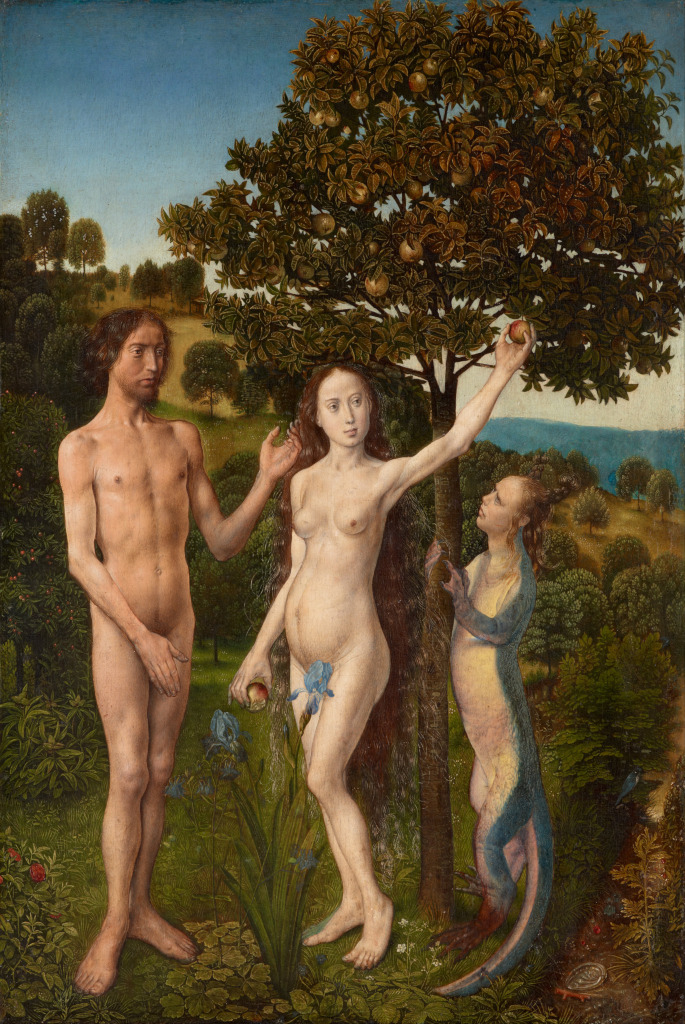
As I’ve pursued sobriety, therapy, and spiritual growth, I’ve had to face many of my own archetypes. I’ve had to encounter my own Adam, my own Eve, my own snake, my own Christ. And I’ve also had to face Lilith. And I’ve had to recognize she’s not just a figure in my girlfriend’s altar—she’s embedded in me. The part of me that says no and “enough.” She’s the rough and the raw, the inner-witch of my own creation, I must integrate into the rest of me. The part of me that walks away. The part that won’t be tamed by dogma, even my own.

Samael and the Final Integration
In Jewish mysticism, Lilith’s partner is Samael—angel of severity and death, a complex and often paradoxical figure who embodies both divine justice and destructive force. In Kabbalistic cosmology, Samael is sometimes identified with Satan but more precisely represents the left-hand path of judgment, power, and severity within the divine structure. As Lilith’s consort, he symbolizes the masculine counterpart to her exiled feminine power—together forming a mystical dyad of shadow and strength, estranged from the divine union yet never fully severed. Their pairing reflects not evil in the simplistic sense, but unintegrated power—power that, in the age of reconciliation, must also be redeemed of severity, sometimes conflated with Satan. In Kabbalistic imagination, even he undergoes redemption. Even the devil bends—not to power, but to love. This is the mystical apocalypse—not destruction, but wholeness. The return of all the exiled. The healing of the fractured. The feast where the outcasts sit at the head table.
The Work We All Must Do
This work isn’t just for witches or therapists. It’s for pastors, addicts, thinkers, seekers. It’s for the church and the circle. It’s for men and women and everyone in between. Because we’ve all exiled something. We’ve all projected some part of ourselves as evil when really it was the part crying out to be seen.
The conversion of Lilith is not just her story—it’s ours. Her exile is mirrored in our own fragmentation, our hidden selves, the wounds we bury rather than bless. To face Lilith is to face the truth about what we’ve cast out—personally, culturally, spiritually. And to begin the slow work of integration. Just as I once found myself caught between scripture and psyche, between sobriety and shadow, we all find ourselves standing at the threshold she guards. Hers is the conversion that dares to include every exile, every wound, every broken piece. The wild feminine, the angry prophet, the part of you that walked away—all are being called home.
The Coming of Sons of Women and Daughters of Men
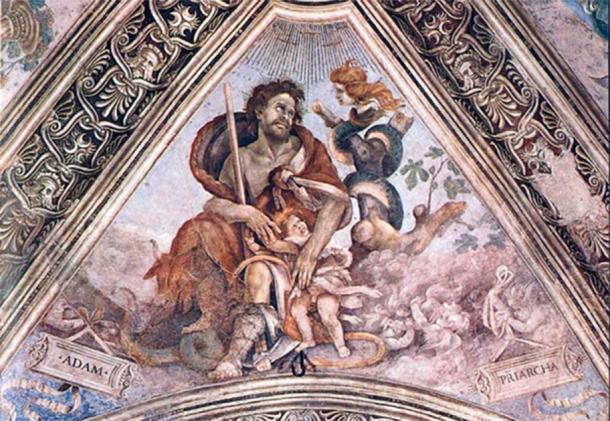
Because healing isn’t about choosing between Lilith and Eve. It’s about reuniting them. And in doing so, reuniting ourselves.
That’s the deeper current I’ve been following—the thread that runs through shadow work, scripture, sobriety, myth, and magic. It’s the same thread that’s been pulling at me while I finish this book I’ve been writing, The Son of Man and the Mystic Awakening. Not a book about end-times hysteria or clouds cracking open—but about the long, slow apocalypse of the self. The unveiling. The integration. The collective reckoning with everything we’ve exiled—Lilith included.
The coming of the Son of Man is not the end of the world. It’s the end of our division. Between sacred and profane. Between male and female. Between the God we projected and the God who actually shows up in our darkest places. It’s the reunion of what we split. The healing of what we banished. The wild God stepping into the mess and saying, “Even here. Especially here.”
Maybe that’s what this whole thing has been about all along—not escaping the shadow, but walking through it. Not silencing Lilith, but listening. Not waiting for heaven, but waking up.
And in that moment, maybe we’ll stop trying to fix everything. Maybe we’ll stop trying to cast things out. Maybe we’ll just surrender. And maybe, just maybe, Lilith will smile.






Inspiring, inspirational words. Thank you for sharing.
Thank you for the comment! And for Braided Way for sharing this. May we all be able to catch Lilith smiling.
read Thomas Merton’s books. he clarifies what it means to read the bible and how to pray.
Thanks for mentioning it. I’ve heard of it, and my coming discusses a similar an experiential encounter with the Bible. Narrative Theology is what I’m most natural with.
If only, your words had been proclaimed long ago.
I am awe struck by your brilliant telling about lilith!
I am recovering from swallowing the ways of growing into my early 20’s as a roman catholic. Also,healing from pastoring for 24 years. I am grateful I am not alone and your work can tend to wounds I carry. May dualistic thinking one day be panic to rest. We are very, very blessed since the original blessing. Thanks.