
In the winter of my twenty-fourth year, I was a ghost haunting my own life in Lowell, Massachusetts. I was caught in the repetitive, grinding gears of addiction—a cycle that felt less like a choice and more like a gravity I couldn’t escape. The gray slush of the Merrimack Valley mirrored the state of my soul: cold, blurred, and sinking. I believed, with the desperate conviction of the drowning, that if I could simply change my coordinates, I could change my nature. I thought that by putting twelve thousand miles between myself and my habits, the cravings would lose my scent.
I sought sanctuary at Wat Buddha Vararam in nearby Bedford. There, I met Ajahn Somchai, a monk whose stillness felt like an anchor. He looked at my fractured spirit and saw a vessel that needed tempering. “Discipline,” he told me, “is the only bridge from the person you are to the person you wish to be.” Under his guidance, I traded my denim for saffron and traveled to the sun-scorched jungles of Northeast Thailand to ordain as a Theravada monk.
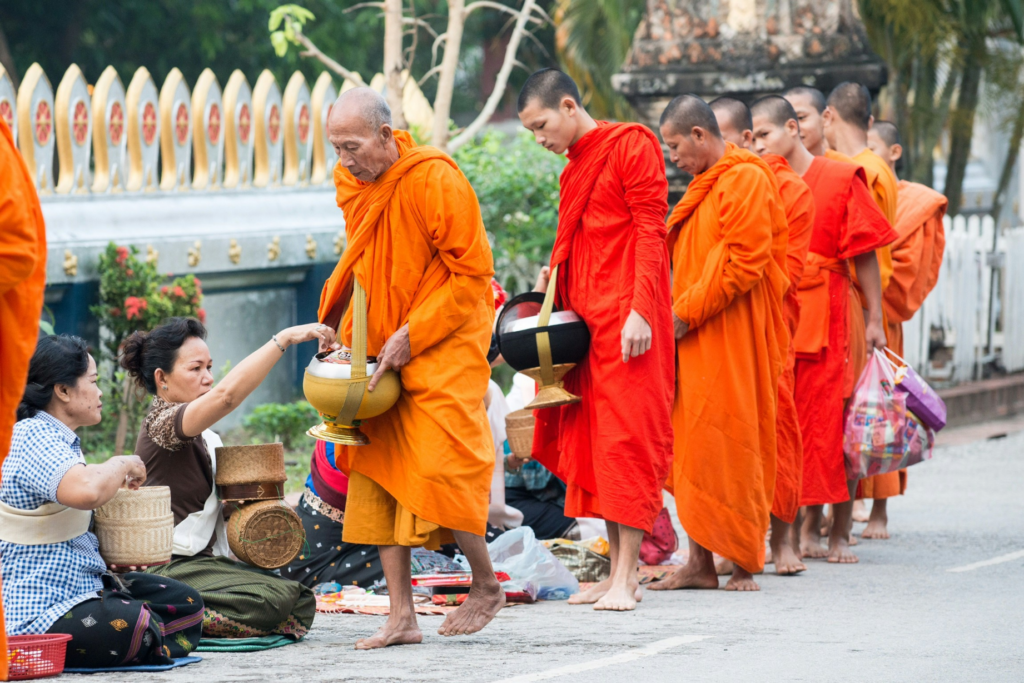
The transition was a violent mercy. Each morning, before the sun had fully claimed the sky, we walked in a silent line for bindabat—the almsround. Barefoot on the cooling earth, we accepted whatever the villagers offered. This was our breakfast, a lesson in radical humility. Lunch, prepared by the temple volunteers, was our final solid meal. After the sun reached its zenith at noon, the kitchen closed. For the remainder of the day, through the long, hungry night, we took only water, tea, or black coffee.
I had expected the monastery to be a place of constant, lofty discourse on the Dharma, but reality had a sense of humor. I spent one afternoon with a group of teenage monks, hoping to glean some ancestral wisdom. Instead, they cornered me with a barrage of questions about American pop culture and girls. They didn’t want to talk about the Four Noble Truths; they wanted to know about Hollywood and music. It was a comical, jarring reminder that even under the saffron robes, the restless heart of youth beats the same, regardless of the continent.
The irony of “misery” became even clearer when I encountered an American tourist near the temple grounds. He was sweating profusely in the oppressive Thai heat, his face a mask of agitation as he barked orders and argued incessantly with his wife and children. He looked at us—shorn-headed, barefoot, and silent—and openly mocked our “miserable” and “deprived” lifestyle. Yet, watching him trapped in the cage of his own temper and exhaustion, I realized he was the one carrying a heavy burden. He was traveling the world but couldn’t escape the climate of his own discontent.
However, the jungle soon stripped away the comedy. While trekking through a dense patch of wilderness, I came upon a chasm near a hidden waterfall. The ground was slick with moss and spray. As I attempted to cross, my foot slipped. For a heartbeat, I hovered over a thirty-foot drop into a pit of churning darkness and deep water.
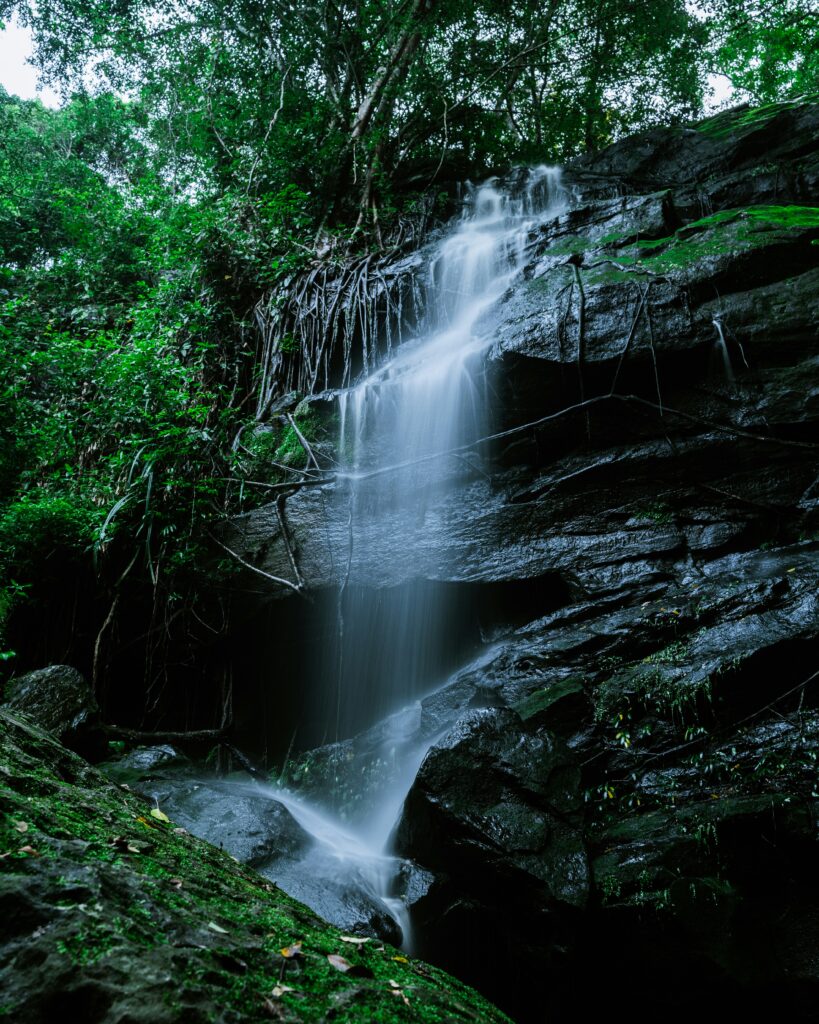
In that moment of suspension, the gravity of my situation hit me: I was deep in the jungle, thousands of miles from the life I knew, hanging over a void that would have ended my story then and there. I regained my footing, my heart hammering against my ribs like a trapped bird. When I finally reached the solitude of my kuti—my small, wooden hut—the adrenaline collapsed into a profound, shaking grief. I cried for the fragility of my life and the years I had wasted trying to destroy the very breath I now fought so hard to keep. It was a baptism of terror that finally made me value my own mortality.
After a few months, the internal bell rang. I knew it was time to disrobe. I hadn’t become a Buddha, but I had become a witness to my own capacity for change. I left the jungle not as a saint, but as a man who had finally learned how to stand still.
When I returned to Massachusetts, I found that the bridge I had built with Ajahn Somchai had vanished. He was deeply disappointed that I had left the monkhood so soon; to him, the path was all or nothing. He wanted perfection—a total transformation that fit his mold—and when I didn’t provide it, he wouldn’t speak to me again.
For a while, his silence hurt, but the jungle had taught me something he couldn’t: I didn’t need perfection to be saved. I had gained insight, and for that point in my life, insight was enough. I had learned to occupy the “Now” without needing a chemical escape. The cravings didn’t vanish, but they lost their authority. I am no longer a ghost; I am a person built of breath and presence. I don’t regret the path, the departure, or the silence that followed. I realized that the greatest distance I ever traveled wasn’t across the world, but the distance between the person who wanted to die and the person who finally chose to live.