The following is an excerpt from the novel Metta Valley Gospel: Book I, by Zachary Helton—a work re-imagining the Jesus story through a lens of interfaith wisdom, religious trauma, and mysticism.
When his pursuit of justice sparks a confrontation with a rabbi no one else dares question, Jesus finds himself cast out of the only home he’s ever known. Disillusioned and guarded, he sets off halfway around the world in search of a truth deeper than the rigid legalism he’d grown up with and finds refuge in the home of another unlikely Judean in exile—an old man named Abraham. The scene below unfolds as they have dinner for the first time, and Jesus realizes he knows less about the old man than he thought.
“Are those scriptures?” Jesus asked, surprised. He’d never seen a private collection before. He caught glimpses of some names and titles as Abraham set them aside.
“Mostly,” Abraham called back. “I’ve had the hardest time tracking down the Scroll of Judges, not that I’ve lost much sleep over it. Bloodshed and conquering… Ah, here we are.”
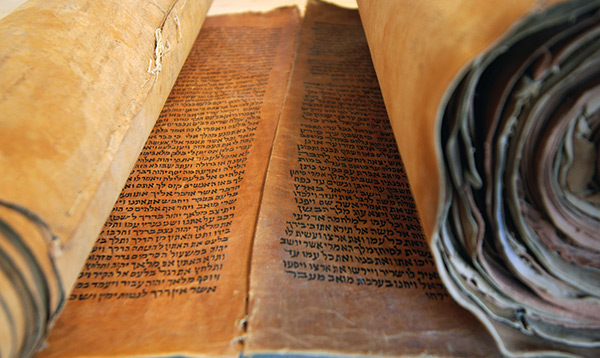
Abraham pulled a scroll from the stack and brought it to the table, pushing empty bowls away. “When I left to train,” he said, “my father warned me I needed to hold fast to my faith and obedience. He warned that there would be influences in Jerusalem that might cause me to doubt and stumble, and that these were a test of my faith. I didn’t think that was possible, but then, I found these.”
Searching the scroll, Abraham found his place. “Listen,” he said. “The words of the prophet Amos to the people of Israel. ‘I hate, I despise your festivals. Your assemblies are a thing of disgust to me! Your burned offerings are unacceptable before my sight! The songs you sing are the sounds of clashing symbols and clanging gongs—’”
“I understand,” Jesus interrupted. “We have fallen short. God is angry. We need to do better. I’ve heard this sermon before.”
“Oh, no you haven’t!” Abraham corrected. “Listen closely. ‘My children, I say to you, I do not want sacrifices, but justice! I want justice rolling down with the power of a mighty river! Righteousness flowing like a never-failing spring!’”
He paused and watched for Jesus’s reaction. “Don’t you see? God’s not angry because they are trapping lizards on the Sabbath. He’s angry because the people are suffering, and the worshipers care more about their assemblies and offerings than helping God’s children.” He tapped the scroll passionately. “I don’t know about your rabbi, but this was not the message I received in my training.”
“Let me see that,” Jesus said, stepping in for a closer look.
You reject the one who dissents, he read, and abhor those who speak the truth.
You trample the poor and build wealth on their misfortune…
“These are scriptures?” Jesus asked. “Hebrew scriptures?”
“Exactly!” Abraham said proudly. “That’s what I thought as well! These are not words written from seats of power or behind veils of self-righteousness. These are words written from the ground! From people suffering under generations of oppression at the hands of proud teachers and corrupt governments.”
Jesus wasn’t sure what to do with this. These words weren’t written by people like the rabbi. They were written by people like him. His mind reeled.
“What does your God require of you?” Abraham read on. “‘What is good in God’s sight? Do justice, love kindness, and walk in humility before God!’ The words of the prophet Micah.”
An image flashed across Jesus’s mind. All his life, he’d imagined God looking down from his throne in judgment, but for just a moment, he imagined God among the people. God in the dirt. God who cared about justice and kindness and humility rather than obedience or sacrifice. “This must be an exception or a mistake,” he said. “That, or we’re reading them wrong.”
“That’s what I thought as well,” Abraham answered. “I kept in mind what my father warned me about, and I wanted more than anything to find a way out of what I’d discovered. My answer was to study them from every angle and with every commentary—even the ones my teachers discouraged—but I continued arriving at the same conclusion. Something was wrong.”
“So, what did you do?” Jesus asked, imagining what would have happened if he’d brought something like this to the rabbi.
“Well, I panicked,” Abraham said honestly. “I mean, imagine what it’s like, after a lifetime of practice, to suddenly suspect you hardly knew God at all, much less what God wanted. To suspect you may have missed the point your entire life! It’s almost enough to make you deny the whole thing, put away the scrolls, and pretend you’d never found them in the first place, which is what I’m confident some of my teachers had done. That, or come up with remarkably creative ways to explain them away.”
Jesus unrolled the scroll further, letting his eyes move down the lines. After a moment, though, his eagerness startled him. He hadn’t felt this way since childhood, and that alone made him wary. He took his hands off the scroll.
“So, there I was,” Abraham continued. “In one ear, I heard my teachers explain how to rightly present myself while fasting, while in the other, I heard the prophets. ‘Is this not the fast I choose: to loosen the bonds of injustice and undo the straps of the yoke? To share your bread with the hungry and bring the homeless into your house?’ That one is Isaiah, by the way. The prophets said our ‘light would break forth like the dawn,’ but I wasn’t seeing much light breaking forth from my teachers, I’ll tell you that. That’s where it all unraveled for me. I no longer wanted to be as my teachers were. When I looked at my peers, all I saw were self-justifying actors, puffed up so full of hot air that there was little room for anything else. It was like the blind leading the blind. I knew if I kept following, we’d both wind up in a ditch.”
“Right,” Jesus said, remembering. “I know the feeling.”
“My colleagues and teachers,” Abraham went on, “they’d focus half their attention on the scriptures that suited them, and the other half on the sins of everyone else. ‘The faults of others are easier to see than one’s own. The cheater hides their shortcomings by accusing the dice of his opponent.’”
“Another prophet?” Jesus asked.
“Another sutra,” Abraham corrected. “The words of the Buddha.”
“The Buddha?” Jesus said, surprised again. “So, you left Jerusalem and became an idolater?”
Abraham laughed. “An idolater,” he repeated. “It’s been a while since I’ve heard that one. That’s certainly what they’d call me, yes. They’d think me an abomination for what I’ve become. That’s all right. The truth is, I realized they were the idolaters. We would make an idol of the law, worshiping it rather than the Living God. We were white-washed tombs—impressive and ornate on the outside, stark dead on the inside. We were like cups someone had only washed on the outside, leaving the inside to mold. I tried to deny it for a while, but in the end, it was no good. My colleagues took to calling me a ‘zealot.’ A ‘radical.’ A ‘blasphemer.’ Anything, I suppose, to make me the problem and not themselves.”
Abraham paused, a sad expression on his face. He re-rolled the scroll and returned it to its place. “So, there I am,” he said, “coming to terms with all this, when what festival should roll around but the Passover? Have you ever been to Jerusalem for the Passover?”
Fuzzy images flashed through Jesus’s mind. A flurry of people. Apprehension. His mother snapping at him. “A few times,” he answered. “I was young. Few wanted us in their caravan, and we could never really afford the trip or the sacrifice.” He thought of his ancient goat and the last time he’d patted him on the head.
“That sounds right,” Abraham said. “They do their best to bleed the people dry right along with the animals. Let me tell you this, though, to adults, Jerusalem during Passover is quite tense. A single spark can set the city alight. The priests, Pharisees, and Romans alike are coiled tighter than angry vipers. They’re worried about the people getting riled up… worried about Romans getting spooked and killing someone… worried about appearances… tempers are short.”
“Hardly the time to tip over a Temple coffer,” Jesus said, remembering what Abraham had told him before—about the reason he’d been cast out.
“Indeed,” Abraham said, smiling. “At the height of the commotion, my teacher decides to make his offering. He’d withhold his offering, you see, for the better part of a year, waiting to have the Passover crowd as a witness. There would be pilgrims from all over Judea there to behold his noble act of charity. He’d claim it would ‘inspire generosity,’ and would make a big show of pouring coins into the bronze coffer. It would make a tremendous racket. Absurd, of course, but to tell you the truth, I think I could’ve stomached that. It was what came after that pushed me too far.”
“What did he do?” Jesus asked, enraptured.
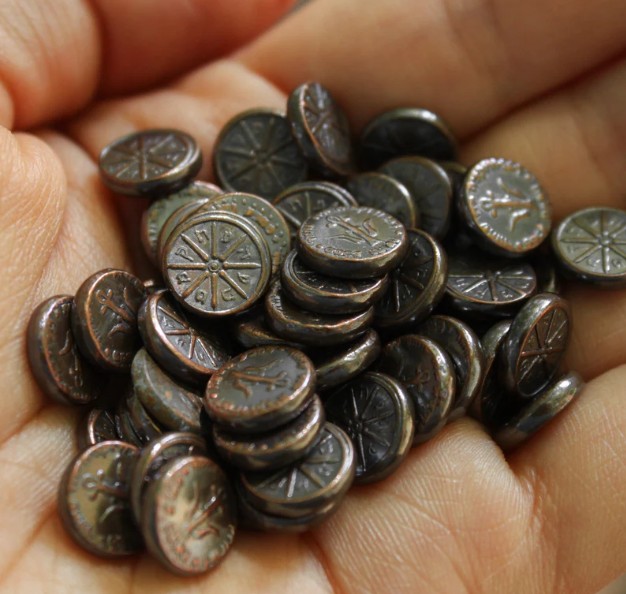
“Not him,” Abraham shook his head. “It was an old woman. A widow. No one noticed her but me, but she didn’t care. While everyone was busy praising my teacher, this woman comes along and deposits two small coins. Mites. Leptons! It’s nothing, but by looking at her, I can tell it’s all she has. That, my friend, is what pushed me over the edge. It’s the Temple’s divinely ordained job, you see, to take care of widows and the orphans—to care for the poor and the vulnerable—and what do they do? They take the last penny from a poor widow while the rich drink in the applause.” Abraham shook his head. “That’s when I couldn’t take it anymore,” he said. “As I saw it, it was the people’s money, not the Temple’s, so I didn’t think twice about it. I let loose preaching from Isaiah and Jeremiah, going on and on about justice and righteousness and corruption! ‘I will bring the people to my holy mountain! I will bring them joy in my house, which is meant to be a house of prayer! The offerings and the sacrifices of all will be accepted on my holy altar, for my house shall be called a house of prayer for all people!’”
Abraham grew increasingly lively as he recounted the story, but at this, his spirit died down. “That’s when I turned the coffer on its side. The Temple guard dragged me off to a cell. It was awful, but as I sat there, I realized I’d been in a cell for a long time. My teacher came in two days later to let me know he’d sent word to my father. A short time after that, on my father’s orders, I was instructed never to show my face in Jerusalem again. That was it. I never saw them again after that.”
There was a moment of silence. Jesus could imagine, on a smaller scale, how that must’ve felt, and he regarded the old man with respect. He remembered how hard it had been to fight back against the rabbi. How much harder would it have been if he’d reached the level Abraham had reached? “I’m sorry,” he said. “It sounds like they lost a good student.”
Through Abraham’s wistfulness, a smile broke through. “That they did,” he agreed. “I spent a long time being angry about it before I made my peace. A long time.”
“Your peace?” Jesus asked. “How do you make peace with something like that?”
“By realizing all I could do was listen well, testify to the truth, then let go of what I could not control,” Abraham said. “It had nothing to do with me, after all. It was about their fear, not my failure. They couldn’t see what I saw, nor could I make them.”
Abraham rose and retrieved a pipe from a shelf, making his way to a chair by the couch. Jesus followed him to the other. “And what was that?” Jesus asked. “What did you see?”
“That much of what passes for ‘God’ in this world is not ‘God’ at all,” Abraham answered, lighting his pipe. “It is nothing more than fear and fragile pride. Build it a temple, hide it behind a veil… that’s all it is. It is the hubris of humankind, gilded in gold.”
“So, you don’t believe in God?”
Only fools say in their heart, “there is no God…” the rabbi’s voice scolded in his head, but Jesus ignored it.
“Oh, I never said that,” Abraham corrected. “I believe in the Living God. It was the fragile god of my teachers I left behind.”
“What’s the difference?”
“The difference?” Abraham echoed. “My, my, what a question. How to phrase it? The Living God is like… well, it is like a lamp that shines from beneath the bushel of human life. It may be dampened beneath fear, greed and delusion, but it dwells in the temple of our hearts, and our work is to let it shine. The Living God is Life. It is Being itself—the great and unnamable I am.”
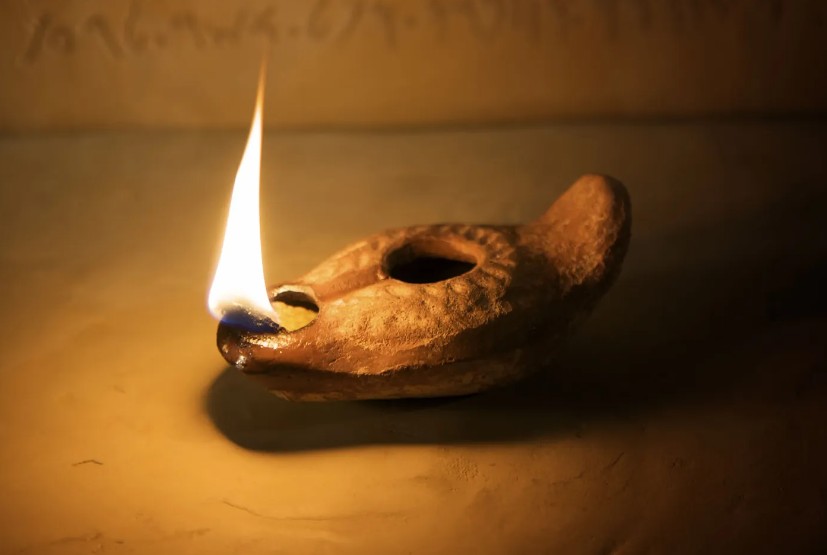
Jesus recognized the story Abraham referred to. When Moses had asked God for his name, his response had been I am that I am, which Jesus had always taken as God being impatient. It sounded like the equivalent of, I’ve said what I’ve said, now cease your questions or I will smite you with a pillar of fire. The way Abraham said it, however, made Jesus think twice.
“The laws we become obsessed with—” Abraham continued, “I believe they were always meant to point us to something deeper. Something more real. It is like a man trying to get a dog to look at the moon. He points, but all the dog looks at is the man’s finger, missing the moon entirely. We were obsessed with the pointing—with keeping the law and offering our worship. We missed the moon—the Living God. That, son, is the difference.”
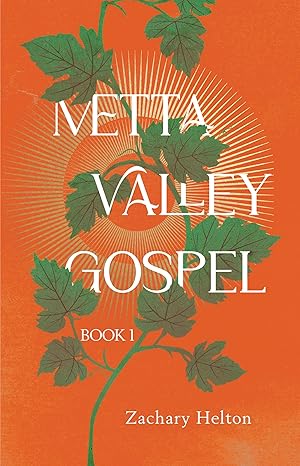
Metta Valley Gospel: Book I is available at your local bookseller and anywhere you order books.