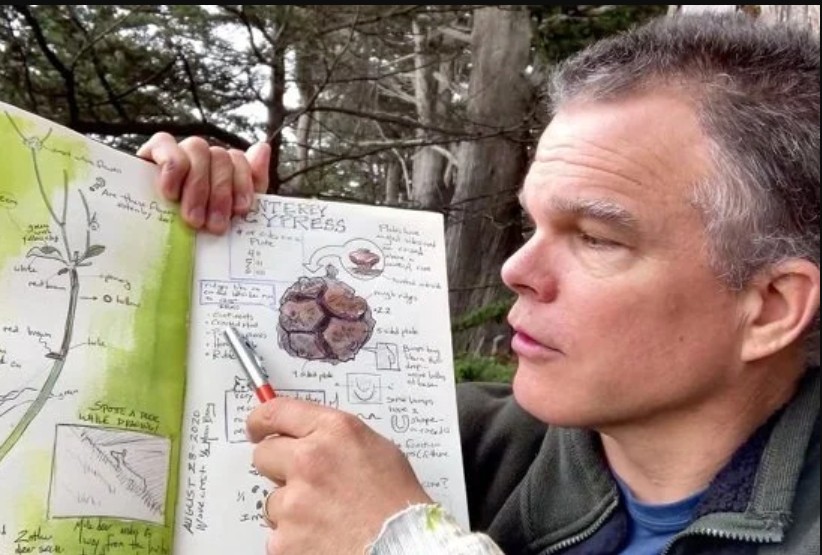
In an age when attention is relentlessly commodified, bought, sold, and fragmented by devices and algorithms, John Muir Laws* makes a radically simple request: give your attention away freely. Not to screens. Not to content. But to leaves. Beetles. Clouds. The ridges in a tree’s bark.
I first came across John Muir Laws during a time when I was searching for a way to integrate my inner life with my work as a teacher, crisis counselor, and nature lover. I wasn’t looking for another naturalist or art technique, I was looking for a way to see again. To recover the sacredness of everyday things. His voice, steady and joyful, kept showing up: in videos about sketching acorns, in conversations about radical curiosity, in the margins of books passed between friends. Eventually, I picked up a pencil and a leaf and followed his instructions, not to draw it well, but to know it. That moment slowed me down. It gave me back something I didn’t know I had lost: my capacity for reverent attention.
“Attention is an act of love,” he says.
For Laws—a naturalist, artist, and educator—this is not metaphor but practice. It’s the root system that feeds every sketch, lesson, and walk in the woods, sketchbook in hand.
“When I’m drawing a leaf, I’m falling in love with that leaf,” he tells me. “I want to know it, not just what species it is, but this leaf, in this moment. What’s its story?”
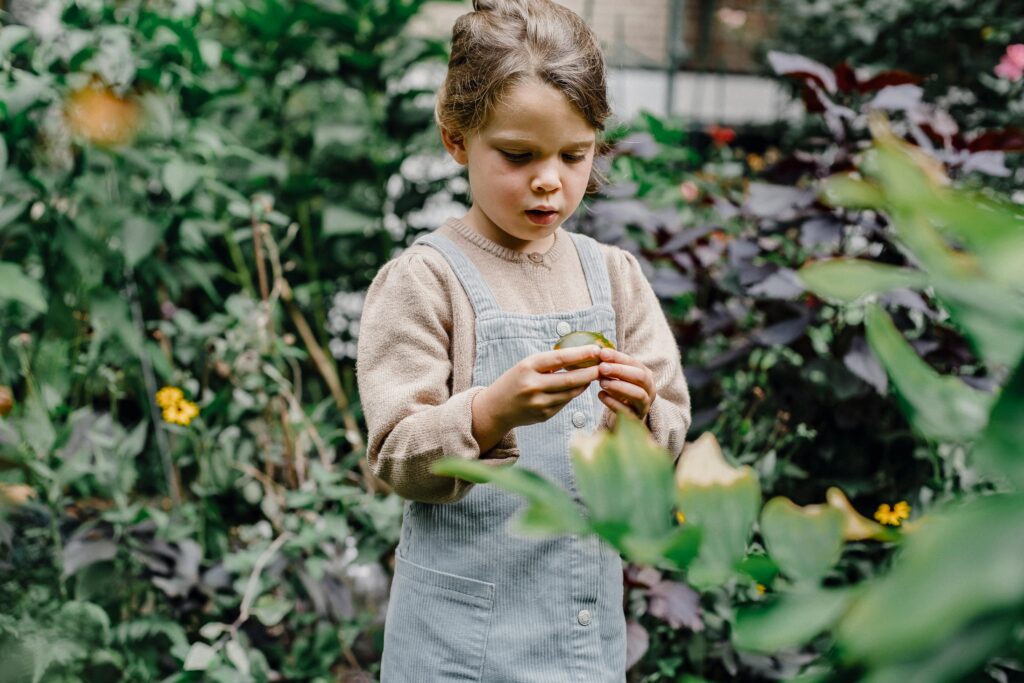
We spoke by phone from his home in California, soon after he led a workshop where children were asked to find and sketch a single plant. Later, they played a game: find someone else’s plant using only the drawing. What emerged wasn’t just laughter, it was devotion. Fierce protectiveness. The plant was no longer a plant. It had become their plant. A relationship had formed.
“Something goes from being an it to a thou,” Laws reflects. “When that happens, when a child starts to care about a single leaf, everything changes.”
There’s humility here. Not the forced kind, but a humility that blooms from knowing one belongs to the living world, not above it.
“I wouldn’t be so bold as to say how nature sees us. I can’t speak for it. But I know that I am part of it. And that’s more than enough.”
For Laws, the ecological crisis is not merely a matter of policy failure or scientific inertia. It’s a failure of perception. We stopped paying attention. We stopped falling in love.
He tells the story of standing in a museum, overhearing a group marveling at an armored fossil—“like the love child of an armadillo and a Sherman tank,” he quips. Then someone named it: glyptodon. And just like that, they moved on.
“Our brains crave efficiency. Once we can name something, we let it go,” he says. “But naming isn’t knowing. And it isn’t caring.”
This is the reflex he seeks to disrupt. Nature journaling becomes not just an artistic practice but a contemplative one. A way to see—truly see—what’s in front of us. Not the mental label, but the living thing.
He teaches beginners to start simply. Trace a leaf. Observe what’s actually there. Not what your mind insists is there.
“It’s not about being good at drawing,” he says. “It’s about relationship.”
He often anchors his approach in a simple trinity: I notice. I wonder. It reminds me of.
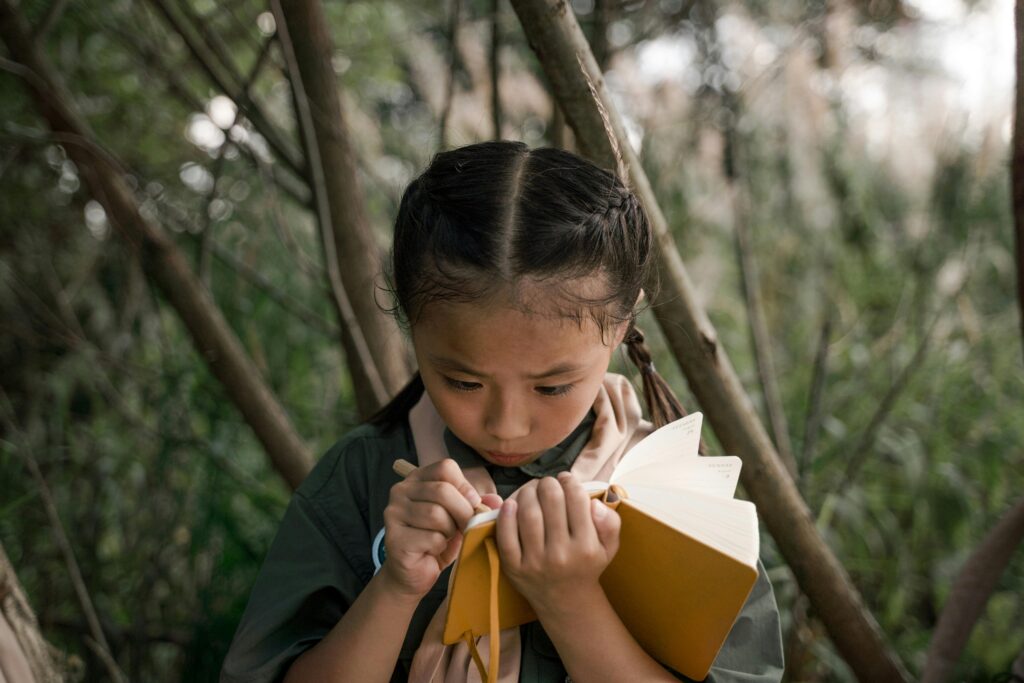
This, he believes, fosters what he calls “intentional curiosity”, a spiritual attentiveness, really.
“When you get curious,” he says, “your brain releases dopamine. It slows you down to the speed of wonder.”
Laws still has his first nature journal. His mother gave it to him when she saw that her restless son became utterly still, mesmerized, when a pencil was in his hand.
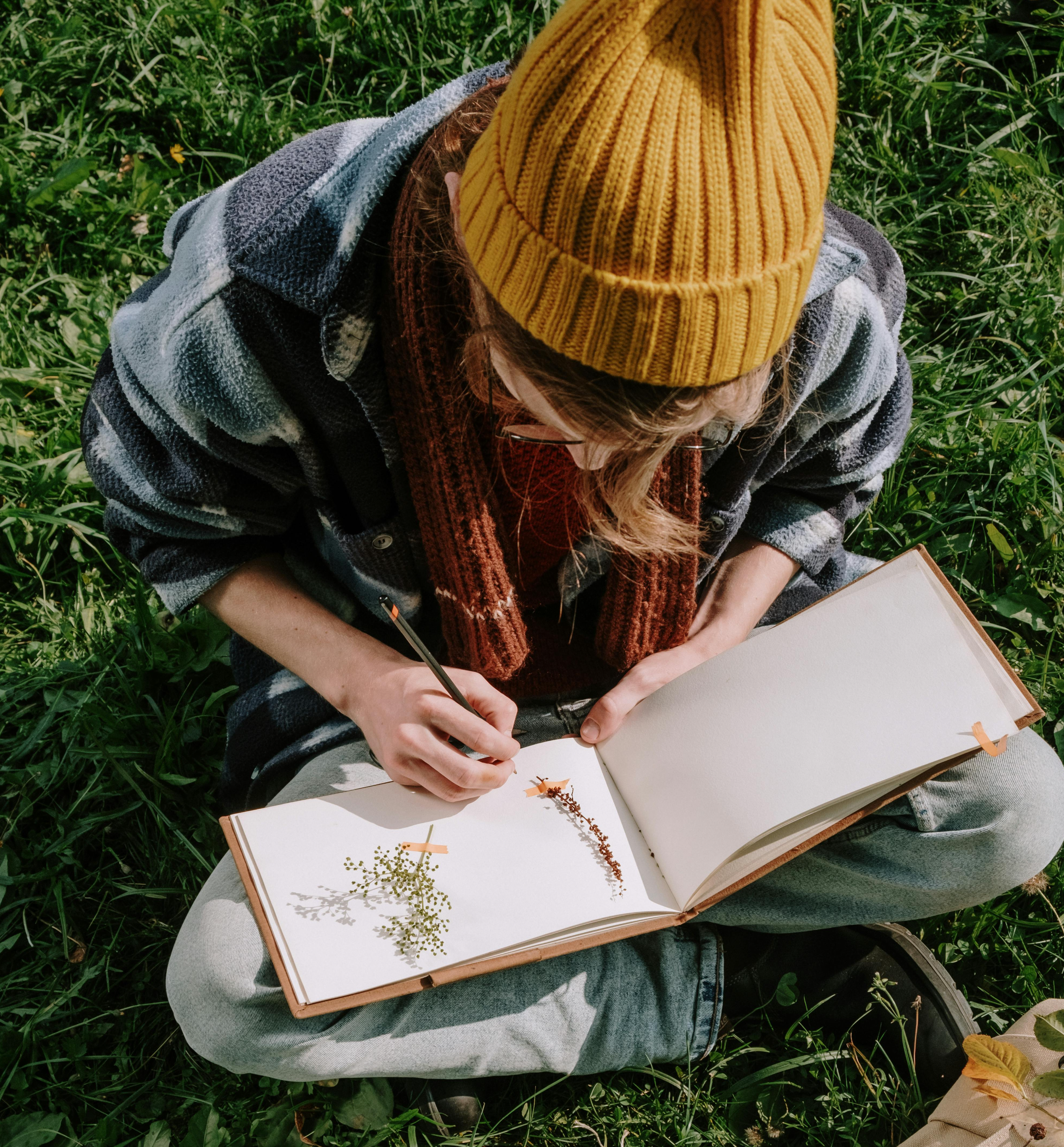
“You need a little notebook, some nature, and permission,” he says. “That’s it.”
He’s since founded the Wild Wonder Foundation, a global hub for nature journaling and education. His books are used everywhere from classrooms to conservation centers. But above all, he champions accessibility: this practice, he insists, belongs to everyone. Urban schoolkids. Neurodiverse adults. Scientists. Skeptics. Artists. All are welcome.
Laws walks a line between science and soul. And he sees no need to separate them.
“Science without wonder is brittle. Art without observation is shallow,” he tells me. “They need each other.”
He believes journaling helps scientists see more honestly. It helps children fall in love with a world they might otherwise overlook. And it helps all of us inhabit a different kind of time, one where attention is neither a task nor a burden, but a blessing.
“When a kid starts naming a leaf after themselves,” he says, “you’ve got them. That’s stewardship.”
Laws has spent decades teaching people to observe and record the natural world in their sketchbooks. “When we look closely, when we draw or write, we’re not just recording facts, we’re opening ourselves to awe. And awe is contagious.”
This discipline of noticing, he shares, isn’t about art or science alone. It’s about survival. As he reflects, I begin to understand that wonder is not a luxury. It’s the foundation of empathy, learning, and resilience. Without it, we numb out, and the world becomes flat.
I asked if this was part of why he teaches. He agreed. “Yes. I want to help people fall in love with their own attention. A leaf, a bird—they aren’t just objects; they are openings. They teach us to care.”
At one point, I asked him: Do you remember the first time you truly saw something in nature, not as a scientist cataloging, not as an artist framing, but as a soul being encountered?
“I don’t remember the first,” he said, “but I can tell you about one that changed me. I was working on my Sierra Nevada field guide, high in a mountain meadow. There was a wildflower in the middle of the meadow I wanted to paint. The sun was beating down. I picked the flower, carried it into the shade, sat with my watercolor kit, and began to draw.
“With a camera, you can capture an instant. But with pencil and watercolor, it takes time. As I painted, the flower in my hand gently curled, withered, drooped. Out in the meadow it had been bright, alive. In my hand, it became a shadow of itself.
“When you pay attention, you can also feel shame. I realized I had made a transgression. I carried the flower back, placed it where it had grown, and apologized. From then on, I painted flowers where they stood. When I left, I would thank them, thank the valley. That was Glass Meadow. For six years I returned, sitting with those flowers, thanking them. Those encounters changed who I was and how I moved through the world.”
He’s skeptical of easy answers. They tend to halt the conversation. Questions, on the other hand, deepen it.
“This isn’t just about knowledge,” he says. “It’s about how much I don’t know. And how beautiful that is. Some things, we’ll never be able to Google. But we can wonder. And that matters.”
He laughs when he says it: “You can’t handle the leaf.”
A phrase somewhere between joke and koan, it gestures toward nature’s infinite intricacy, the impossible richness of every leaf, every living detail.
You can’t handle the leaf.
But you can see it.
You can trace its edges.
You can let it astonish you.
You can fall in love again with the world.
And maybe, just maybe, that’s enough.
*John Muir Laws is not directly related to the famous conservationist John Muir, though he acknowledges the frequent confusion and shares a deep admiration for Muir’s legacy. In fact, in interviews and public talks, Laws often clarifies that the shared name is coincidental but meaningful. His parents named him John Muir Laws out of respect for John Muir’s contributions to environmentalism. The name serves more like a guiding influence or homage rather than a genealogical connection.


Such a stunning blend of poetry and journalism! I wonder at your genius. I will return to this beautiful leaf as a daily prayer, a prayer for a life of wonder and a pandemic of awe. Thank you for the reminder that it is all here awaiting our attention.