Beyond our little pains, daily woes, self-criticism and wandering thoughts, there is a wiser part of us that lives somewhere in our most peaceful core.
This wise part speaks to me in my liminal moments, between waking and sleep, when emerging from a dream.
She once said to me: “Do not envy the robust”.
I couldn’t comprehend what she could mean because, how could I not envy the robust? The capacity to run, to dance all night, to feel the pulsing vibrancy of a young human body not in a fairly constant state of careful hypervigilance and pain management. But when I slowed down, the meaning behind the words emerged. She wanted me to no longer disavow the parts of myself that I deem fragile, vulnerable, not only physically but psycho-spiritually. To understand there is more that moves through a body than just pain or pleasure or the lack thereof. She wants me to see there is more at work here beyond the ease of a life lived without pain. To begin to see with different eyes the way that those with pain, with bodies that don’t ‘work quite right’, with nervous systems that struggle with emotional regulation are teachers, are vectors for the movement of collective pain up and out. A collective nervous system of the world of which we are one fratchety part.
That maybe we are this way because it is meant to be so, because at our end of the spectrum at least (and perhaps increasingly across the whole) signals of not- alright-ness are being communicated. We are the proverbial canary in the coal mine. Drawing attention to not just the growing numbers of those with chronic conditions and cancers due to environmental stressors and toxins, but also the emotional distress that permeates these times. My wiser self wants me not to denigrate the parts of myself deemed emotionally vulnerable, my propensity for tears, the symptom of my connective tissue disorder of which I am most ashamed, the emotional dysregulation, and see it for what it is. A person deeply attuned to the world.
But what if being a highly emotional person is like showing more range? Maybe some people’s emotional ranges are just wider, more expansive, more capable of transmission from one physical/emotional body to the next. Some of us are just more open to the world, more porous, and there doesn’t seem to be any amount of psychological, nervous system, or trauma work one can do (believe me I’ve tried) to change this fundamental aspect of how one experiences the world. Through the matrix of a body in which one’s nervous system seems to be so deeply wired to the heart, where one’s nervous system is prone to swing wildly outside the clinical ‘window of tolerance’ or so often it seems more like outside of the window of other people’s tolerance.
Or more colloquially the lack of capacity to keep calm and carry on, to be quiet and not make a fuss. It. is. a. wiring. In my opinion, a form of neurodiversity, the neuro in neurodiversity referring to the nervous system and not brain as is commonly assumed. The difference being one of wiring. My nervous system is deeply alive and so finely tuned that I am (as is often flung as a sort of insult across the divide of emotionality)… highly strung. I vibrate constantly and with rapidity. I cannot be without resonance. If another instrument in the room is playing I will be playing along like a sympathetic string on a sitar.
I have spent so much time thinking there is something wrong with me, being pathologised by others as depressed or manic depressive.
But I am not sad.
I am just not numb. I am often just a lot of things. All at once, everything all of the time. I am moved by the way my cat holds herself with a poised femininity against the fall of the curtain on my window sill. I am overwhelmed by the beauty of a line from a song, by a heartfelt interaction with a stranger. I am also often simply moving stress up and out of a body that has accumulated so much tension. The tears are an opening, a release valve, a pouring forth of what cannot be kept within because there is so much to hold and it cannot all be held within this one frame.
I don’t feel vulnerable exactly, though I do feel deeply reliant on my webs of love and support, and I would certainly struggle without them. But mostly I feel alive, moved, invigorated, passionate, jubilant, wild and gentle and, yes, sometimes sad.
It feels like there has been a narrowing in our tolerance for the human in all its wide and varied expression. We are not allowed to go a little mad with grief anymore, to roam the moors until we walk ourselves back to ourselves. ( In fact some forms of grief have been reclassified as a kind of mental health disorder that warrants medication.) We are not allowed to have slightly more unhinged years where we try something weird, or fallow years where we do very little but wait and be in ourselves and get to know the person we are aging into. Now we must perennially be emotionally healthy, mentally stable, and managing our mental health at all times. And when we do deviate, as almost everyone does, because this path is just too narrow to walk for long, it is to be managed as quickly as possible, no learning needed, no deeper message encoded in your breakdown, no wise-loving self trying to let you know, by the last and most extreme means at its disposal, having exhausted all else… “you have strayed off course! Danger! Danger! There is danger to your soul if you stay on this path!”
I have come to loathe phrases like “mental health.” It cuts like a scalpel through the human experience and sterilizes everything that does not fit neatly into one of two boxes, healthy or unhealthy, well or unwell. We are so much more wide ranging, wild, unfathomable, and meandering than the current framework of ‘mental health’ can hold scope for in expression beyond the designated therapy-speak of ‘working on ourselves.’
What if we are never done, near healed, never fully well? What if we are always in process, flowing and ebbing, forwards and then back? Storm clouds will gather above us and coalesce, they will let down their rain no matter how much we try to prepare ourselves for the deluge. We forget that when we let a storm run its course, afterwards there is a bright day that comes, and in the new sun’s rays we can barely remember how we felt in the days before. We do not need to name it, to fix it to ourselves like a butterfly under a pin, but let it go, shrug it off and keep moving. If we interrupt this process with medication, we never get to see the day when the storm breaks and remember that nothing ever really lasts. (So often even those who experience a psychotic episode do better long term when not medicated at all, when they are just allowed to move it through and out the other side without needing to alter their brain chemistry.)
The world is so much more wildly vast and we are too, nothing alive can ever truly be controlled, or named, or syphoned out into neat vials or flasks and sealed tight shut for categorization.
Of course there is a place for holding yourself together, for learning to take a deep breath for a time, particularly when children are involved who need stability and not a mother out on the moor roaming. But the moor time will return, when the children are off living their own lives and the tide can come back in again.
I wonder about having children. I think about the future of the human species. Would a world filled with the robust be better? Would humanity have a better chance of survival? Sometimes it makes me not want to pass on my strangely malleable, permeable, flexible genes. But humans do not just rely on brute strength nor a kind of rational intelligence for survival. One of the greatest technologies for keeping us alive has been that of the dreamers, the poets, and storytellers. They may have been the difference between survival and extinction, of knowledge being passed down, or new knowledge emerging. The robust ones have very little of emergence about them, they are very here already, so very sturdily, solidly here. The ephemeral ones, the ones already a little bit gone or perhaps a little here, there, and everywhere, are the ones who have a kind of membranous porosity, a space for things to come through.
I want to say that we all need to get better at holding, at witnessing, at acceptance differences, but the truth is our institutions and our maladapted modern world are not set up for holding, we do not have the time, the energy, the skills. We are perennially distracted, exhausted, overworked. It feels as though that is by design. Indeed those of us who are ‘different’ are often viewed as an inconvenient thorn in the side of our endless growth and productivity culture. My fear is it’s only going to get worse.
Sometimes it can feel like there is no place for highly emotional people, for the neurodiverse and the disabled. (In my experience there is often overlap here.)
Until we start taking seriously the knowledge of those who, be it due to neurodivergence, disability, the residual hypervigilance of abuse and trauma, or those who hold innate sensitivity and thus read the world differently; those who can tell us different stories, with different heroines, who can make contact across species divides, who can read subtle changes in the environment, who can sense changes coming in the wider human web, who can translate messages from the more than human world; those who, for whatever reason have not had their senses dulled by generations of domesticated sterility and repression, and still hear the collective human and nonhuman other’s cry, and nourishing and making space for them; until then we will likely only keep on down this narrowing, asphyxiating path that ultimately leads to the destruction of us as a species.
Tyson Yunkaporta talks about the conception of disabled people in his Australian aboriginal Apalech clan’s cosmology where, “somebody who would be regarded as handicapped today would be… that’s somebody who’s been marked by spirit for something special” be “regarded as a sacred person.”
He likens the importance of the differently-abled to how native women have an algorithm for seed selection– when choosing seeds out of the basket of corn for planting, every now and then they add in a seed that looks maladapted in some way, maybe small or diseased, and “it gets planted too.” This wisdom recognizes “ there’ll be something else in that seed, some aspect of it that might be resistant to an insect that hasn’t arrived yet.”
Handicapped people are seeds that need to be in the mix. They are pattern breakers in a pattern that would otherwise infinitely self-replicate and thus ossify.
He tells a story to Josh Schrei on The Emerald podcast in which he and his wife were out in an old growth forest and “there was a fellow …he was quite severely mentally handicapped. He started talking, and we just stood there, listening to him, and his carer kept interrupting and apologizing to us and we were like No shut up we’re listening to this fellow. He’s giving us truth, he’s talking about ‘and they took me up into the sky here and it made my nose bleed’ and we were like, It was just getting good! The story was coming through this boy and he was not Indigenous, but he was connected in spirit because he’s marked in that way in spirit you know.” He ended by saying “pattern breakers are as important as the pattern”
What would things look like if we truly acknowledged this fact, if we knew it down to the marrow? That the intuitions and experiences of those who are different are vital, and will be even more so in the coming times when our current structures are about to be upended and new knowledge will need to come through and new ways of seeing centered if we are to survive.
Perhaps I would not envy the robust so much if it felt like those of us who are not pattern, but pattern breakers, were honored, held and respected, given a place… to dream up and birth the adaptive ways that we will need if we want to survive this potential extinction event or at the very least radical change in technological and societal organization. Things won’t look the same, but that might be a good thing if we let the dreamers do their job and let them bring through something new, something waiting for us on the other side. They are the ones who know how to cross over and how to make it back, changed but alive.
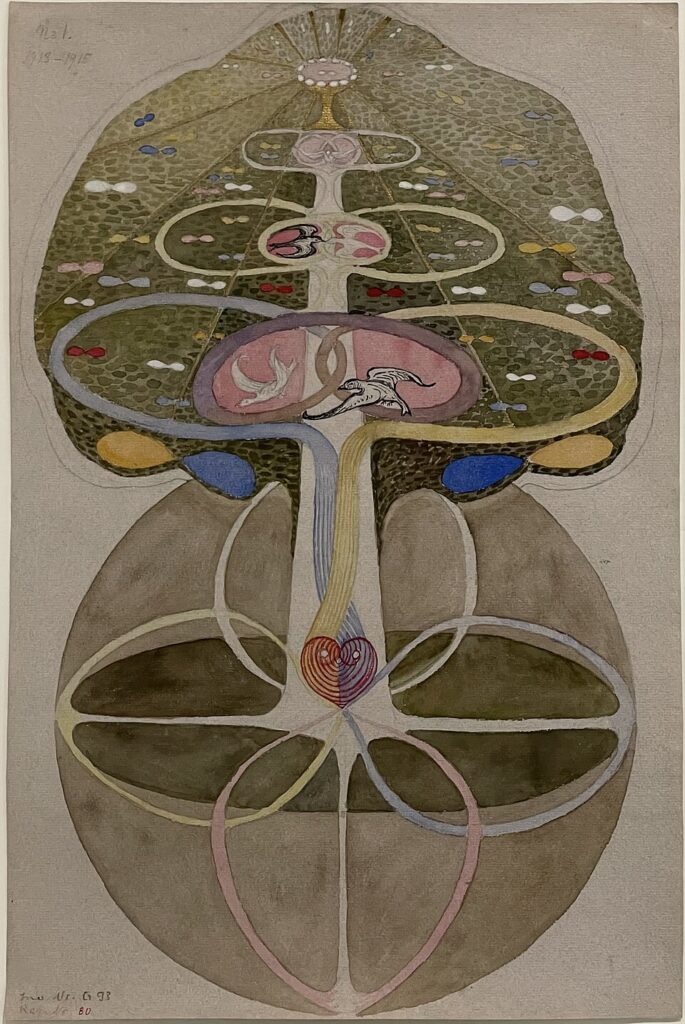
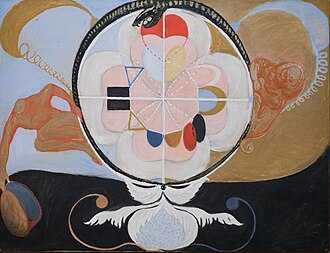
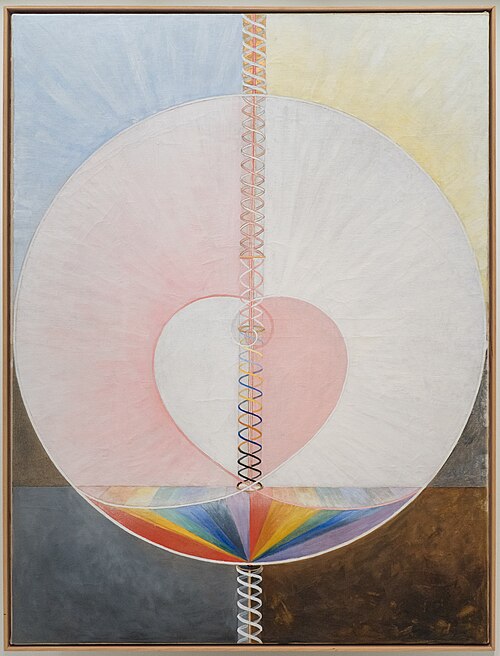
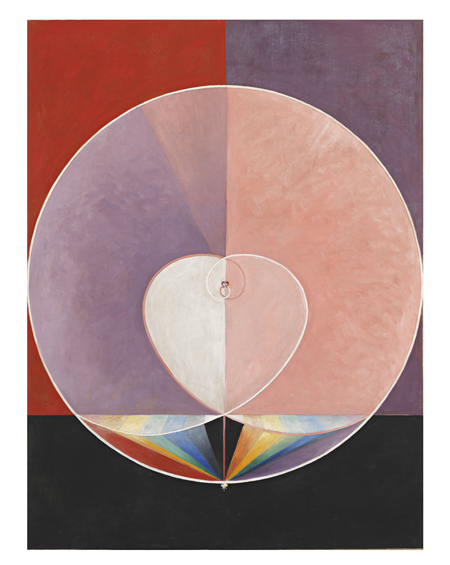
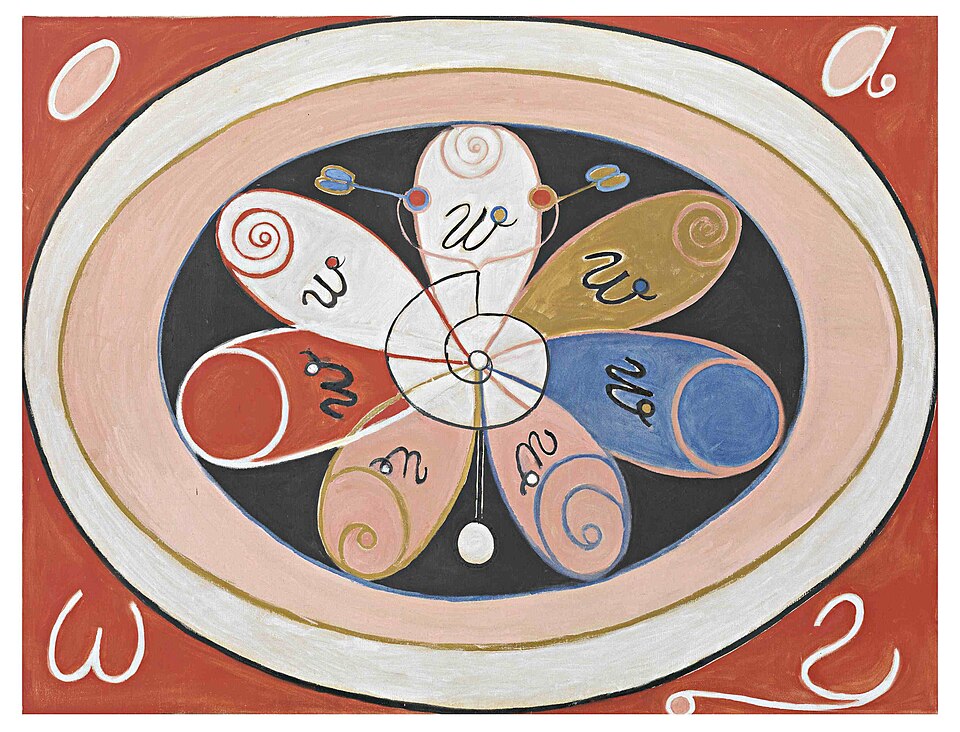
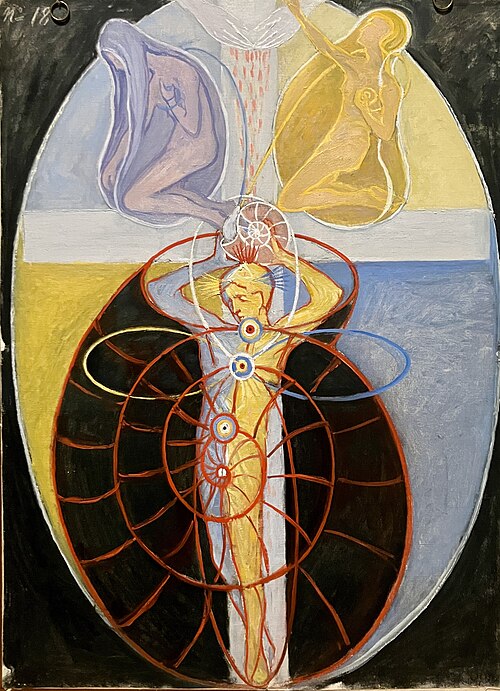
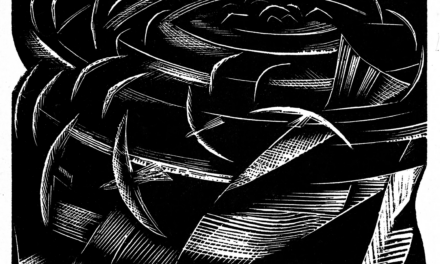
All paintings by Swedish artist and mystic, Hilma af Klint


Such a profound and important piece. I would love to read more work by Frances Browning here
Such a beautifully expressed and inspiring piece. Very much needed in our modern world. Thank you
This is so beautifully written, so true, and so needed for our times. And it’s so validating! I’ve been struggling all my life to try to be less sensitive because it affects my health so much and yet, it’s really what I like best about myself. It’s not easy feeling everything so deeply, but I truly wouldn’t have it any other way. This brought up so many feelings in me. I was literally just talking to someone about what kind of people think we admire most in the world and they thought I was crazy because I said musicians and poets keep me alive and they didn’t understand that. Of course I admire people who go out and work to preserve the environment and save animals and feed humans, etc., but we need people who are in touch with the mystical and can share that with us. People like you! Thank you so much for this. Namaste.
What a beautiful, thoughtful piece. I actually think the world would be much better if people didn’t think they had to be “robust”. We all need to share our vulnerabilities. Thank you for offering this astute perspective.
Hi Laurie,
I’m so glad the peice touched you and you saw yourself reflected in it.
I too sometimes forget that I admire sensitivity in others and then chastise myself for it.
Part of writing the piece was as a reminder to myself but also to others to cherish that aspect of themselves.
It is true it is not easy feeling things so deeply but I too would not really change it if I could.
This is why I write, in the hope that it might touch someone such as yourself and help promote the value of those who feel deeply, I truly also believe we are needed in these times.
So thank you!
I have a couple more pieces on my Substack that are in a similar vein Incase you wanna check them out, ‘I am not productive’ and ‘ the exhausting pressure to self- actualise’ and next week will be posting a piece about neurodiversity.
Thanks so much for your interest and thoughtful response.
Frances
Hi Laurie,
I’m so glad the peice touched you and you saw yourself reflected in it.
I too sometimes forget that I admire sensitivity in others and then chastise myself for it.
Part of writing the piece was as a reminder to myself but also to others to cherish that aspect of themselves.
It is true it is not easy feeling things so deeply but I too would not really change it if I could.
This is why I write, in the hope that it might touch someone such as yourself and help promote the value of those who feel deeply, I truly also believe we are needed in these times.
So thank you!
I have a couple more pieces on my Substack that are in a similar vein Incase you wanna check them out, ‘I am not productive’ and ‘ the exhausting pressure to self- actualise’ and next week will be posting a piece about neurodiversity.
Thanks so much for your interest and thoughtful response.
Frances
I have struggled most of my life with migraines, which have been diagnosed as primarily stress-related, but what if…? What if those are just my body’s way of forcing the pain of the world from my soul through my body?!! It’s a revelation, an epiphany that encourages me to view differently the physical pain I experience as, perhaps, an expression of the emotional pain and turmoil I am constantly absorbing. Thank you!!!
Hi Chrissy,
Yes absolutely I think migraines can be an accumulation of all the heaviness and pain we carry and absorb from the world around us, particularly if you are of a porous nature. I also get migraines and in my experience so do all the women I know with a similar disposition. The body is wise and knows how to discharge this pain and remind us to rest and hermit for a while so our systems do not become overcharged! Thanks for taking time to read the piece!
Frances