
Father Ralph DiOrio, a non-denominational healing priest, from Leominster, Massachusetts, would address his audiences by saying that we are all broken, that we came to him to be healed because we are broken, but that we must be broken further to become whole. He would incant that we all needed to be “crushed in the vat of the Lord,” upon which, as the grapes are pressed to make wine, we too could become the liqueur of God, but only by willing to be squeezed to breaking in the Lord’s winepress.
I connect this to my training several decades ago in practicing Zen. In the breaking down of the ego, in fact in the disavowing of the ego, in transcending the ego we’re told we can free ourselves from our own constraints and possibly experience the quantum leap that is satori. In my own practice I didn’t experience that leap but on two occasions I did see luminous visions of Christ in front of me on the basement wall of the Yale Divinity School Chapel where I meditated with a small and dedicated group of devotees.
Decades later, I even had the occasion of experiencing a shared awakening experience with my partner, Tevis, but that was after having been broken several times in my life. Through this process of being broken our ego can be demolished, releasing the bonds within ourselves to reveal a luminous center. But the thing about brokenness that we must remember is that it isn’t a one-time experience in any person’s life. It is not unlike any spiritual breakthrough – it is often followed by a dark night, a period of brokenness. We might think that an illumination is once in a lifetime, and it often is. However, with as many stars as there are in the sky we can experience as many spiritual breakthroughs, or of even more significance, awakenings, always often preceded and certainly followed by a dark night.
The depth of our dark night, or our brokenness, often reflects our awakening.
Dark Night
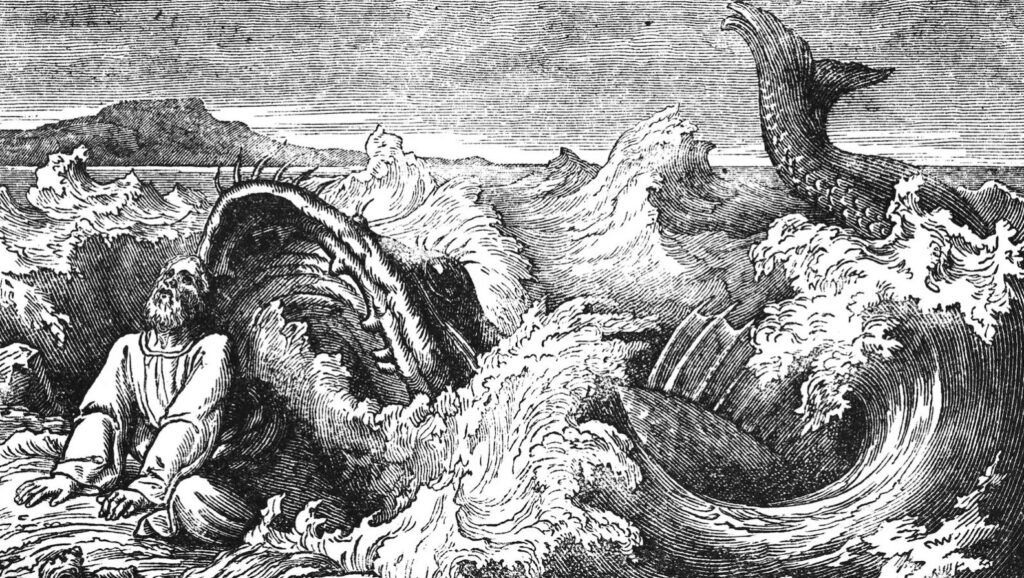
Dark night is our time spent in the proverbial belly of the whale. It is the very deep dungeon of our brokenness. I know caregivers go through many dark nights – as many dark nights as they will have breakthroughs in their caregiving. When we see someone who might be going through dark night, we should always be both compassionate and humble. Our active humility will show us the way forward, especially since our own dark night may very well be just around the corner. Every epiphany can be followed by dark night and vice versa.
The German lyric poet, Rainer Maria Rilke, writes in The Orpheus Sonnets that as deep as one’s sorrow is we should learn to hold onto that since our joy will depend on how closely we embrace it.
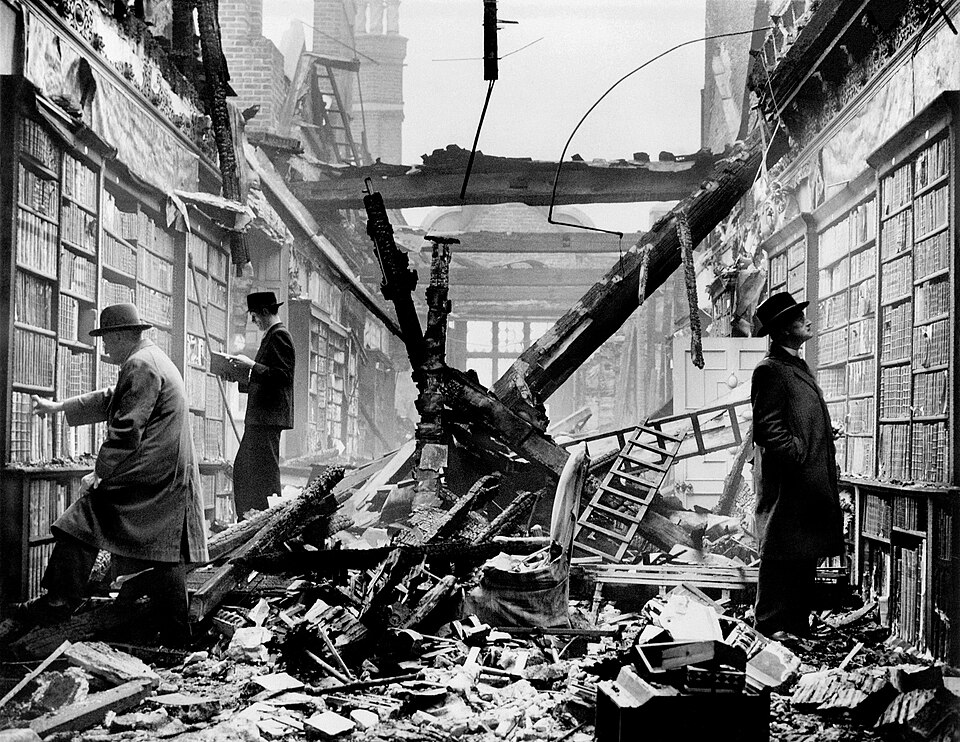
Dark night is brokenness. Dark night is London under the Blitz. The light shining through reminds me of a favorite photograph of friend and colleague of mine in the antiquarian and used book business, Mrs. Alberta Robertson. It depicted the walls left standing in a bookstore in London after an air raid, just the walls of the shop, with some of its books still on the shelves, and with a few customers striding amid the rubble –browsing.
Dark night, for a caregiver, is having the person you’re caregiving finally say what their memory loss therapist has warned you about– when the person you are caring for asks, “How do I know you?” There it is: dark night. It may have followed a favorite dinner you had made or after a lovely walk under the bluest sky or after a breakfast that transformed itself with what had been the best conversation in months: “How do I know you?” Dark night has no ending.
However, dark night can and must be endured. Dark night is never the enemy. It can be one of our best allies. If you choose to evade dark night or belittle anyone for enduring dark night, you are creating a recipe for disaster. Right-wing conspiracy theorists and Q-Anon activists are an example of this. They are trapped in the darkness of their own prejudices and tortured thinking but they eschew dark night because they exhibit no compassion or humility in their consideration of others who willingly enter into dark night. In eschewing dark night they remain dangerously ill-equipped to accept any kind of spiritual illumination. They remain, as with weights chained to their souls, deep in illusion.
Dark night is a requirement for growth: spiritual, psychological, even social. Dark night is the event of our brokenness and concomitantly the event for our release from brokenness – when we are able to step lightly out of the mouth of the whale and onto dry land, when we have earned the new vision we are entrusted with, as Juan Ramon Jimenez points to in this poem, which I recently translated from the Spanish:
The white moon removes the sea
from the sea and returns it to the sea. With its beauty
in a calm and pure expiration,
makes the truth no longer true,
and lets it be truth eternal and alone
which was not.Yes.
Divine simplicity
that defeats what is true and places
a new soul in what is real!
Unforeseen rose, that takes the rose
from the rose, that gives
the rose to the rose!
Gift of Brokenness
What is Jimenez speaking about regarding “an unforeseen rose,” and how do we understand “that takes the rose/ from the rose, that gives/ the rose to the rose?” Although Jimenez may not have intended to address dark night in this poem it serves as a template for the spiritual alchemy of dark night. If “an unforeseen rose” is dark night, any dark night anywhere happening to anyone, whether on a battlefield or a classroom or a workplace or for a caregiver or especially for the person the caregiver is caring for, we all become “an unforeseen rose.” And if we all inherit the earth through our humility, then, and only then can what that rose never before imagined “takes” from “the rose” within the rose it alchemically “gives” back “the rose to rose!”
Dark night is all about renewal. Rilke relays to the young poet seeking guidance in a letter to him that “we are all beginners.” This also resonates with humility, a humility with which we may be actually worthy to not just, or only, enter the metaphorical kingdom of heaven, but would have made ourselves small enough to slip through the blowhole of a whale, an enormously difficult dark night, stepping over shards of ruined buildings, to emerge once again in the light of a new beginning – whatever that new beginning is or mean or stand for or can be embraced. And to be grateful for that.
What Happens Next?
Dark night offers us the experience of brokenness, but what happens next: what direction leads us up, where do we carry the shards in our attempt to piece them together, how do we move toward the light, which way are we headed? After emerging from the belly of the whale we’ll never be glib about what direction we might take but we will have learned through gathering the pieces of our lives.
The direction we take is the one in which we follow our nourishment and delight. Jimenez mentions “divine simplicity.” That’s a good place to begin. “Good Buddhism,” Joseph Campbell once said, after he dodged a question about what love was, “is enjoying your friends, enjoying your food.”
Divine simplicity can be just that: mending shards, shaping new pots, planting spring plants. We will probably not change the depraved arc of rhetoric of a Marjorie Taylor Greene but we can stand up to her with our own sound and cogent line of talk, which is inclusive and not exclusive, which is human and not inhumane, which is elucidating and not obfuscating.
Through dark night we experience brokenness and when we eventually emerge from our brokenness, we inherit the direction in which we choose to go, even if we may not be thoroughly conscious of it. Through dark night we have learned new levels of humility, and through humility, vitally active humility, we now can offer compassion.
In comprehending compassion, we heal through the experience of dark night and also from brokenness.