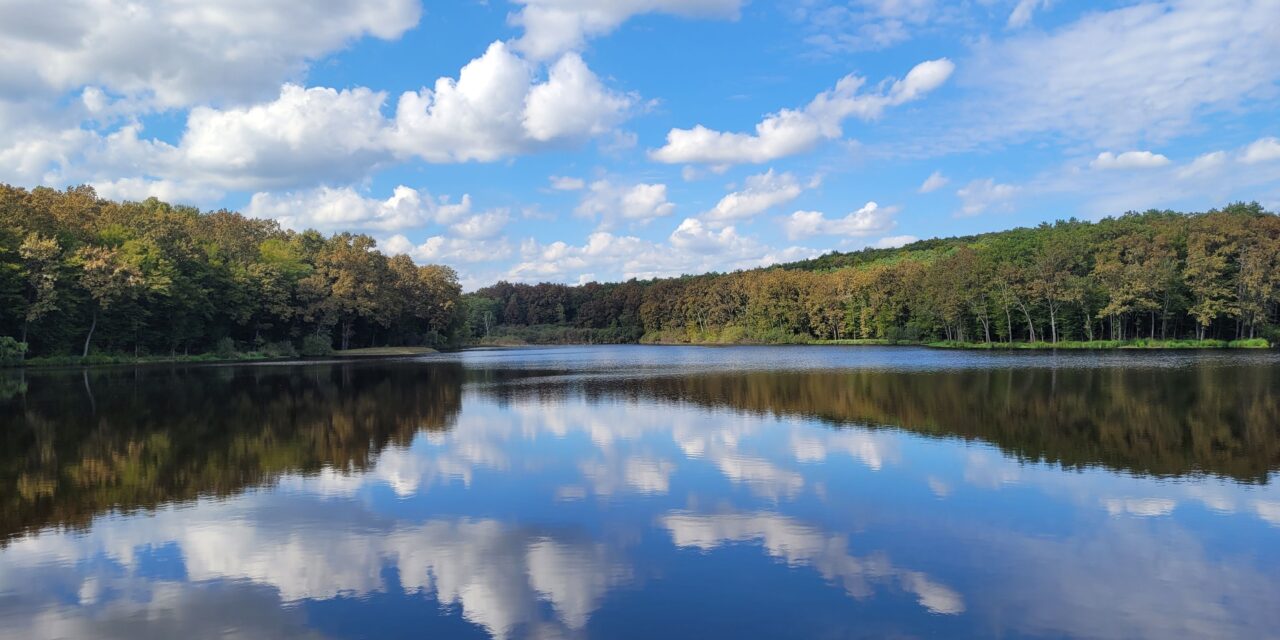
It is May. My legs ache. I can pinpoint where my femoral heads nest in their acetabula. But I walk on. Each year, I hike Lake Habeeb, a reservoir pretending at limnence, like all of Maryland’s so-called lakes. A ranger at Rocky Gap State Park, which encompasses the lake, corrected me once: there are, at times, naturally occurring tidal lakes.
The lake exists, like so much else manmade, because economic concerns brought it into being. The Maryland State Planning Commission’s 1951 report on “Recreation in Western Maryland” notes “vacationists” seek water for fishing, boating, and swimming. Catering to vacationists in the region would be crucial; mining was already in decline, as was agriculture. If one of the four major midcentury industrial employers in Allegany County left, an economy already then marked by high unemployment would be devastated. How to diversify? Tourism.
The report recommends remediating the damage economic pursuits had already caused. The state should secure mineral rights under current and proposed parks, so mining companies couldn’t come blow the tops off mountains. Laws should require existing and past mines to restore landscape and habitat. Leaching acid from mines destroyed waterways; parts of the Potomac, the report notes, are “wholly without fish” that vacationists would want to catch. Cumberland should stop burning soft coal to clear scenic views. All that and a few more dammed creeks, a lift to local cuisine, some paved roads, and Western Maryland could be a destination.
It was prescient. Kelly Tire left in 1978; the Baltimore and Ohio, 1981; Celanese Fiber, 1983; and Luke Paper, finally, in 2019. Their collective legacy is captured in EPA reports about the ongoing cleanup and monitoring of sulfur, arsenic, mercury, boron, benzene, manganese, chromates, caustics, pesticides, fiber asbestos, polychlorinated biphenyls, and hydrochloric, sulfuric, and phosphoric acids.
The area I hike around what was then a stream survived, farmed instead of mined. A local florist donated land, lobbied senators, and rallied community support to preserve it as a park. So Edward Habeeb (Hay-Bib) earned a much better legacy, his name on the portion of Rocky Gap Run that the Army Corps of Engineers dammed in 1970.
I always go for this hike in the rain. Today, too, wet blackens the otherwise bleached, bark-stripped bones of snags revealed by now perennial drought. They reach for the receding water their snapped roots at upturned stumps cannot provide. At least they touch it, finally fallen. I think, seeing the ash borers’ and pine beetles’ ravages, that the forest shoulders its own dead, their slanted trunks perched precariously on the living. Louise Erdrich’s Fluer—the subject of Tracks—would not need surreptitiously saw and leave stand the lakeside trees here to fall on trespassers, like me, at a strong wind. Who, I wonder, would carry me?
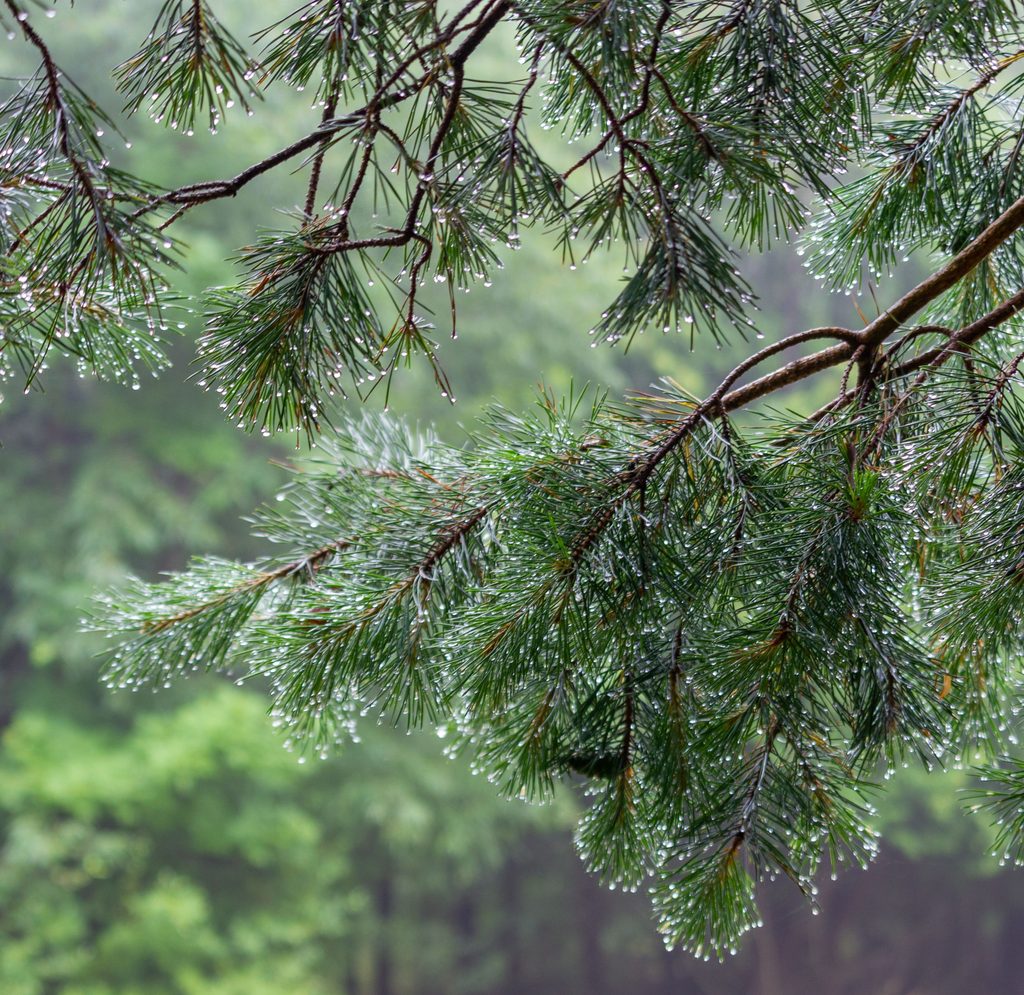
In Japan, they have since 1982 called this shinrin-yoku, forest bathing. The benefits of a forest walk come through terpenes, biosynthesized by a cornucopia of sound—dimethylallyl and isopentenyl pyrophosphates—into mono-, di-, and sesquiterpenes, the scent of pine trees. To breathe deeply here, it is said, is anti-inflammatory, anti-tumorogenic, neuroprotective. The bursae around my hips, it seems, haven’t noticed.
Researchers from Konkuk University must purposefully have summarized that the benefits of forest bathing come “via showering of forest aerosols.” Today, it’s not quite an ablution; rain filters through the late spring canopy at less than half strength, more sound than presence. What reaches me rolls easily off my raincoat. But the drive to find something sacred in the woods where waters have gathered, by force of man or not, resonates the same.
Surely, some mixture of water, terpenes, and the mystical are what drew a broken-hearted Jacob Evart high up on his, Evitt’s, Mountain, which rises above what would be Lake Habeeb, around 1730. What healing did the trees offer? What solace for an ache that could drive a man to only his own company? Almost 100 years later, Thomas Jefferson McKaig, having heard of a hermit, climbed to check, finding cleared land, fruit trees, and the remains of an abandoned foothold high on a forested mountainside. Another hundred years later, the bare outlines of a foundation, slowly buried in layers of leaf litter, the stones of a well. The footprints I leave in the mud now won’t last the day.
Here, at the foot of the mountain, the unnatural shore stretches much farther than usual despite the rain. The reservoir is down five feet; swimming, Ranger Cliff Puffenberger explains in a TikTok style video for visitors, is prohibited. Online, the DNR warns visitors of impacts on “swimming, boating, and baptism activities.” Outside the buoys barely afloat at the waterline lurk dangers for even experienced swimmers—stumps and brush unceremoniously covered by water in creating the reservoir, debris that has accumulated since then, and strong currents near the dam.
The dark water, Puffenberger calls it. Danger. For Fleur, it is Mishipeshu, the scaled, spiked Ojibwe creature with a cat’s head and paws that dwells in lakes’ depths, dangerously shifting currents, prowling on the scene of drownings. My own family’s earliest lore is a drunk fatally mistaking silt for shore in the Vistula River. After finding my father’s Carnegie medal buried in a desk drawer, I looked up his citation for diving again and again into Minnewaska, unsuccessfully, to find and rescue his brother from the lake bottom. I feel dread in the leaden links of buoy chains dropping down into murk, in the gnarled masses of roots and deadfall waiting to snag a cuff.
In Kant’s theory of the sublime, our experience of nature is a negative pleasure, borne of fear. He asks us to consider rock overhangs, thunderstorms, a restless, heaving ocean. Against their might we are an “insignificant trifle.”
When I first read Kant’s aesthetics, I stood at the dropped boulders enforcing boundaries on Lake Michigan’s otherwise seemingly endless blue. I am fleeting. I am here at Habeeb only until an invisible strand of fishing line might snare a foot and pull me under, until a leaning tree’s pallbearer gives way as I pass. My orchards, chimney, well, cannot withstand natural force.
On the far side of the lake the path closes in with dense brush on either side. In the middle of the trail, a fishhead and bones. Fresh. Raccoon, probably, though my imagination conjures a black bear I wouldn’t know until too late.
What, then, do we go out into the wilderness to see? I open the window just to hear thunder, gaze into the lakebed, stare at the bodyless dead fish. At the flooded stream ripping and roiling, Kant would stand content in his reason, realizing, he claims, that his mind endures regardless to subdue nature by discovering the order and laws in it.
Ask an art expert what work has best captured the Kantian sublime, and chances are they will point you to Caspar David Friedrich’s Wanderer über dem Nebelmeer, or Wanderer above the Sea of Fog. You know it: a man, dead center in and obviously the focus of the painting, jauntily perches atop a triangular foreground crag, dapper cane propped against a hip, shoulders thrown back, enjoying a mountaintop view.
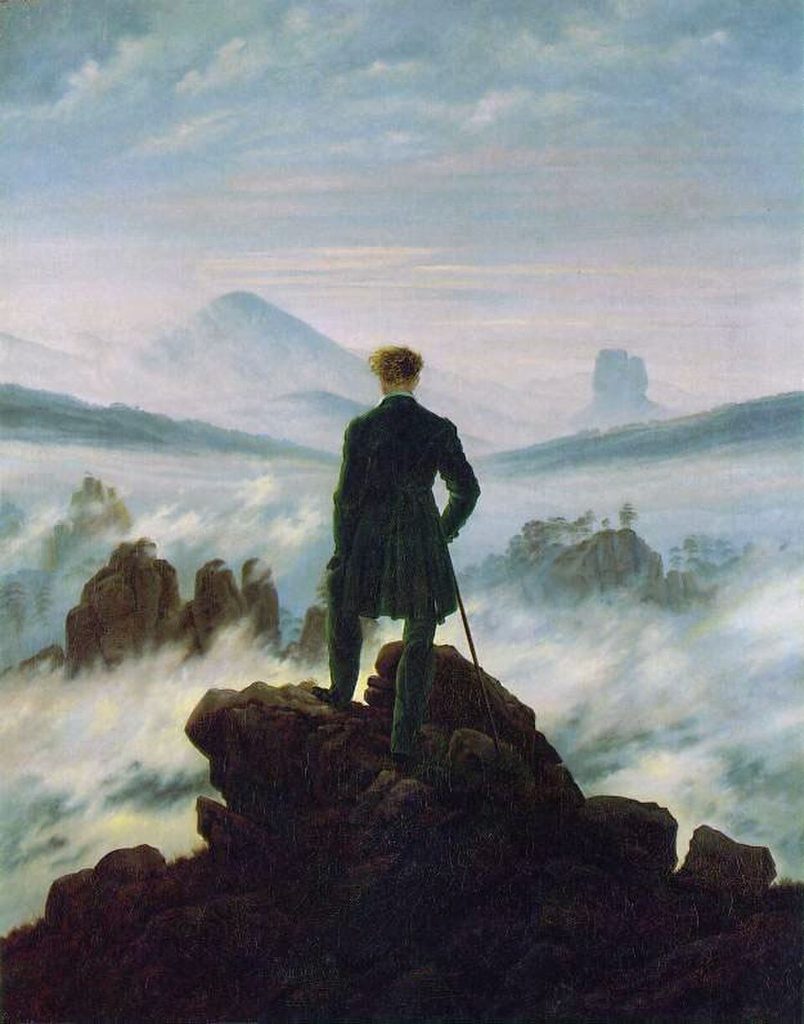
Wanderer above the Sea of Fog Caspar David Friedrich
The Met, for its recent Friedrich special exhibit, calls the man “smartly attired” in velvet. His suit jacket is impeccable. One foot higher than another, he stands like a trophy hunter over his kill, having conquered earth—land and sea, from the title—and ascended above the clouds.
It is time I confess I abhor the painting often billed our best example of Romantic aesthetics and thought. My brows furrow and eyes tighten. Irrational. Anger. I disliked it well before I could watch how mist frequently rolls through and obscures the valleys around my home on an Appalachian ridge, despite the State Planning Commission’s claim that “Fog is not frequent enough in the region to be worth reporting.” I have driven, scarcely able to make out grass from road a few feet away. Now, even more, I cannot understand the wanderer’s bareheaded, surefire cockiness.
I don’t care much for Kant, either. I don’t think anyone is quite so rational as Kant believed himself. Were we, we’d follow that categorical imperative and society would be in a far better place. We are much more Vico’s giants under thunder.
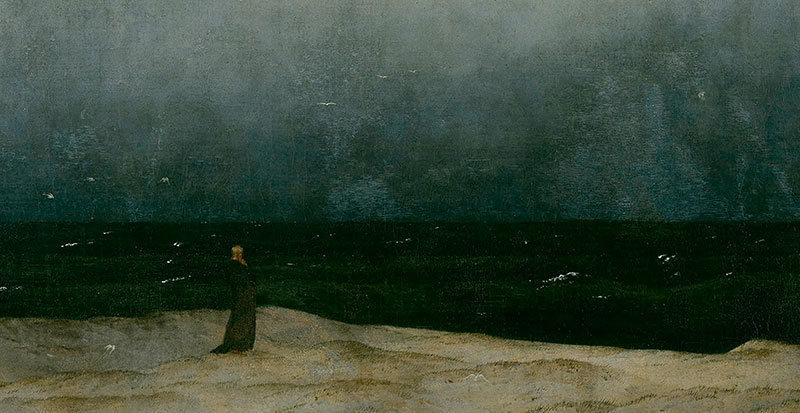
So I prefer Friedrich’s Der Mönch am Meer, or Monk by the Sea. A lone figure, in a purposefully unremarkable habit, is dwarfed by ample, unsettled grey sky that dominates the painting. The small strip of dark, rough ocean menaces, and a similar strip of uneven shore supports the monk. The colors are dark, muted. Power need not be showy.
Unlike the wanderer, the monk stands off center, his body bowed in an arc, perhaps by the punishing, billowing wind driving the waves.
Here, Friedrich portrays what the sublime truly does to a soul lost in infinity. It is beautiful because it elicits terror. How could it not? I could become a vacationist, drive to the coast, and shout the periodic table into the ocean’s ears and still shudder as storm surf churns into the shore with the force of six metric tons per square meter.
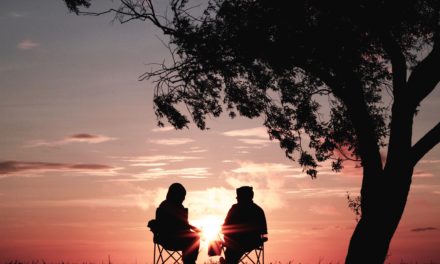
Perhaps I have ruined my rationality by bathing myself too much in the negative pleasure of the sublime. Sheltering my own heart, I was a part-time hermit on Elmen Hill behind my college dorm taking in each South Dakotan sunset that spread over a horizon so flat you could feel the earth curve. To this day, a sunset makes me feel like wet tissue paper—fragile, transparent.
The sublime dots the Dakotas, too, in dead, untended scraggles of orchards and washed-out, leaning, dead-eyed abandoned reminders of our unintended finitude on the vast, stretching plains on which you can watch storms roll in for hours. Like farms, companies shutter. Even the mountains around my Appalachian home shapeshift as stripmines cut at their faces.
The ache of beauty in a sunset and at the water pulls on my soul. It is more than we can hold, more than we can possibly deserve as we pretend we are not ruins in progress, sense that we oughtn’t be. A Native American classmate explained to me, after we had read Tracks, in which Catholicism and Ojibwe tradition collide, that she could hold her multiple, conflicting belief systems together all at once. So name this feeling we share what you like: the negative half of the Kantian sublime, mourning loss in the anthropocene, the fall of magic to science, the terror and pleasure of the sacred or the infinite against our own limits. I know it as I AM, but it falls on us the same.
I am naked before it. Next to sunsets, horizons, and waters, what am I?
I hike in the rain. But air, air is the element. This year, I hear a yellow-billed cuckoo. The field guide I find later that sorts and categorizes and rationalizes nature calls its song “throaty.” But I am sure it means to say hollow, flutelike, the rush of the sound’s making carried with it.
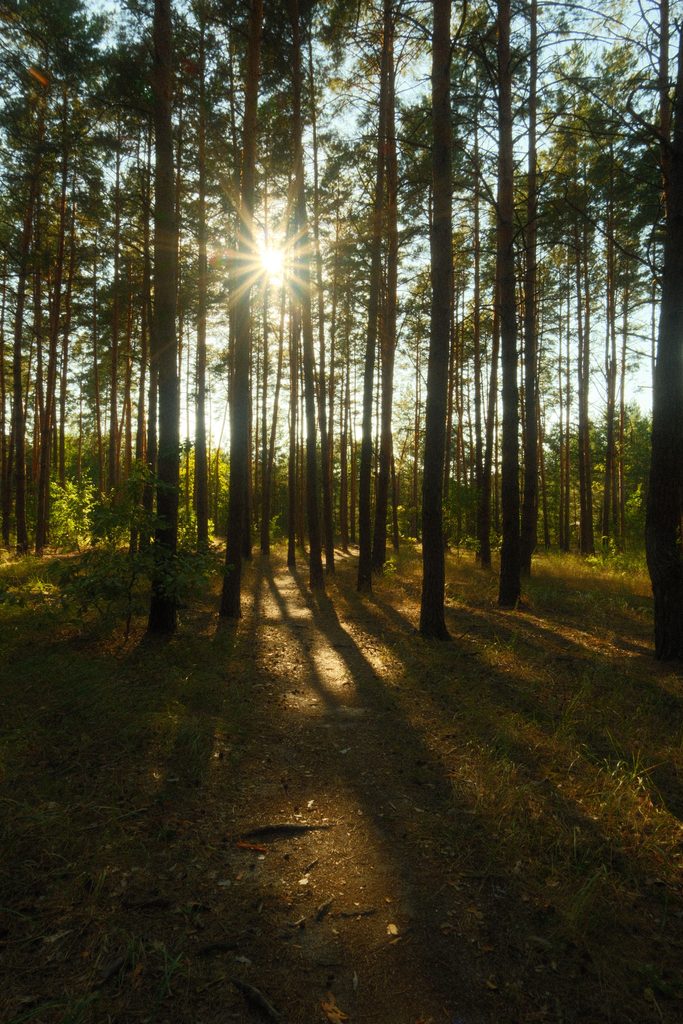
In a stand of pines, needles piled underfoot soften my steps. Terpenes released, unevaporated, hang dense in the air. Here I cannot pretend to more than what I am. A mosquito flits before my each exhale; I am become just what I was made—breath.