
I have always loved words. In childhood I played newspaper reporter, interviewing the cows and chickens on our farm about horrific plane crashes, devastating tornadoes, and nefarious criminals. I would then take my notes to the newsroom – my second-story bedroom – and hunt-and-peck them out on a light blue manual Smith-Corona typewriter that one of my older siblings left behind. In high school, my favorite English teacher inspired me to start writing in a journal, a practice I have continued ever since. I live in constant awe of the ability of a single word to explode a thought into cosmic brilliance — or to crush a spirit into a black hole of despair.
I grew up in a bilingual household in a farming community of families who were two and three generations removed from immigrant ancestors from Bohemia, a region of present-day Czechia. My dad was second generation and did not speak English until he started elementary school in the 1920s. My mom’s parents were born in the U.S., although their older siblings had come through Ellis Island with their parents in the later part of the 19th century.
I grew up hearing my parents’ first language, but they did not teach it to me or my siblings, primarily to embrace the identity of being American. Czech, or Bohemian as they called it, was the language of the Old Country; English was for progress and making a prosperous life in the Land of Opportunity.
Within the milieu of family and our Catholic faith, males were central to life, and females existed on the periphery. Men were the people with heavy feet and deep voices whose words were sparse but carried finality. Women’s words played supporting roles and revolved around food and children. My primary role models – my mother and maternal grandmother – schooled me with words of comparison through which I was to understand my position in life. I was to be quiet, never vocal; a follower, never a leader; subdued, never assertive. Stepping outside of those parameters invited shaming. My mother accentuated the differences between boys and girls for me with a conviction of the ways of “nature”: Boys were naturally smarter/tougher/wittier/better than girls.
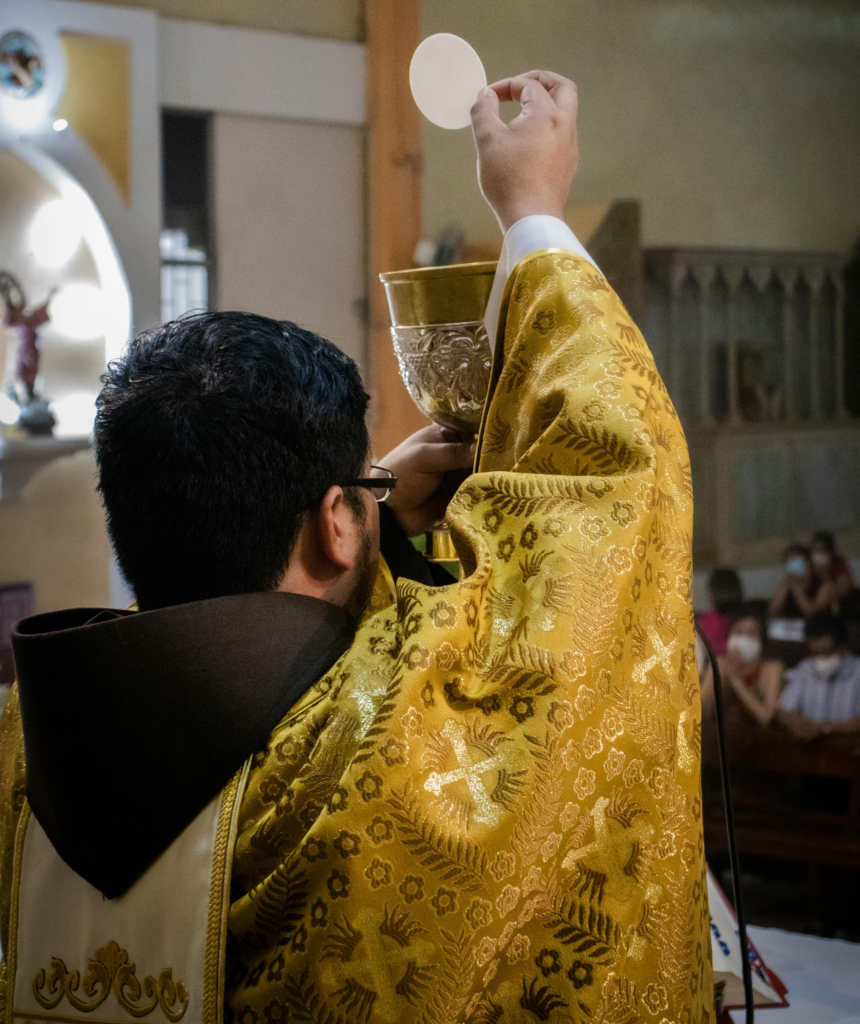
Within the red brick neo-Gothic walls of our parish church, I learned words like sacrifice, sacrament, and sin. The crucified Jesus hung high on the sanctuary wall above the altar to impress upon the congregation our innate sinfulness and the extreme sacrifice He made for us. The priest, dressed in white and gold vestments, carried out the sacraments, especially the Eucharist – the Holy Sacrifice of the Mass – to continually bring us back into a state of grace where we were once again acceptable to God. The Mass servers, dressed in their white surplices over crimson albs, were ordinary boys that I knew from school. Centuries of tradition elevated their status over me, and I could never embody their sacred role because of my biology.
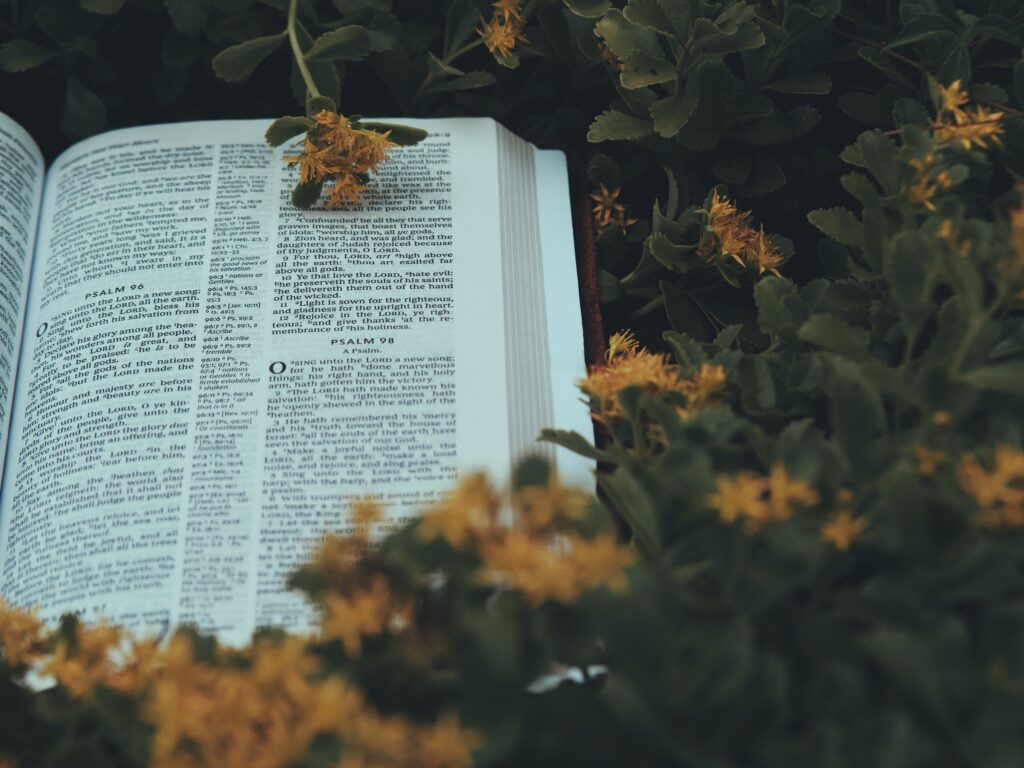
Nevertheless, during high school I was a liturgist at Mass (the priest was progressive in this way), reading aloud the epistles and the responsive prayers for the congregation. But the words in the missalette were stilted and jejune, black stamps on economical newsprint, their meaning far distant from a sixteen-year-old girl’s trials. I tried to understand them, even dusting off the family Bible from its forgotten shelf in the living room. The red-edged pages were impossibly thin; the words in heavy black serif font seemed cryptic and forbidding.
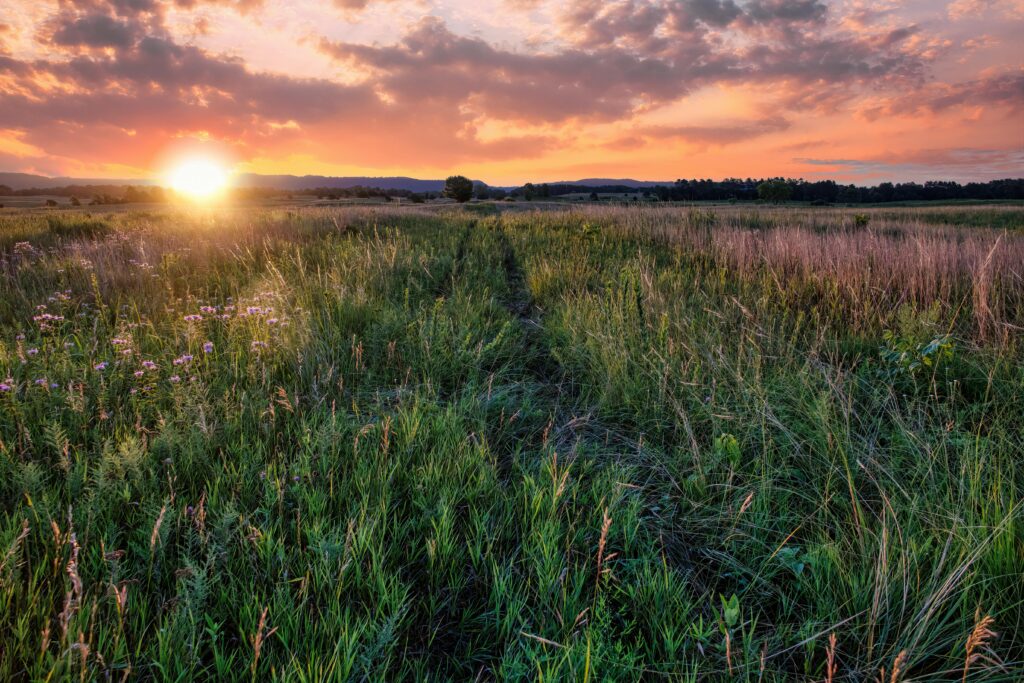
My escape from this narrow and banal world was walking among the trees and through the pastures of our farm. I drew myself to the water and the horizon, the sunsets and clouds and rolling grass prairie. I absorbed the land through my footsteps and the sky through my pores. I could never be enough in church or school or family, but the natural world awakened within me glimmers of the unfettered, the unlimited, and the transcendent.
Christian scriptures refer to the body as the temple of the Holy Spirit (1 Corinthians 6.19), yet my female body was not a worthy place for God to make his home. Jesus was male, after all, and therefore only a man could stand in the place of Jesus in the sacraments. It was a simple explanation to satisfy a child in Catechism class, but lurking in the background was the specter of a dark pessimism: only a man’s spiritual experience was normative. Only a man could be trusted with the words of sacrament and sanctity. A woman’s words about divine reality must be censored through the lens of a man’s spiritual understanding.
In college, I resolved to find my own way in the faith and began exploring Bible churches, charismatic fellowships, and other Protestant denominations. Words were central in these traditions. The focus of Sunday mornings shifted from the parade of vestments and the Eucharist to The Word, as I learned the Bible was called.
Along with my new born-again Christian friends, I carried a Bible to church every Sunday. This is what had been missing, I thought to myself: a solid understanding of the Bible. This was the way, finally, to find God and to have an empowering relationship with him. By understanding The Word and applying it, I would finally be equipped for a life of inward peace, freedom, and accomplishment. God the Father would show me the way.
He did not.
The Word, while inspiring in places, comprised stories written by men about a male god for the edification of other men. Women were auxiliary characters; rarely were they central actors in the narratives. I looked in the back of my Thompson Chain-Reference Bible at the list of topics and verses recommended for personal and spiritual development. The subjects were separated into categories appropriate for men and for women. The list for men was substantial and included topics such as leadership, trust, godliness, courage, and discernment. The list meant for me consisted of a few lines under the heading Women and Children and included verses admonishing me to be humble and quiet. The primary words I learned were submission, surrender, and silence.
I pursued a graduate theology degree after college and was ordained in a mainline denomination that had a richer background in biblical scholarship and spiritual reflection than the churches from my college days. Nevertheless, my presence as a woman in both the seminary and professional ministry was often resisted by both laity and clergy, women as well as men. The words of The Word — full of metaphor, myth, paradox, historicity, cultural nuance, pre-science – were simplified into literal terms when the question of women and “their place” came up. The ones wielding this word demanded that women be silent.
Many theological ideas in the New Testament writings have Greek philosophical origins, including the concept of the Logos, translated as Word.One of its most intriguing uses is in the prologue to the Gospel of John:
In the beginning was the Word
and the Word was with God
and the Word was God.
The Word was with God in the beginning.
Everything came into being through the Word,
and without the Word
nothing came into being.
What came into being
through the Word was life,
and the life was the light for all people.
The light shines in the darkness,
and the darkness doesn’t extinguish the light.
(John 1.1-5, Common English Bible)
The gospel writer drew on the concept of the Logos to situate the historical Jesus as a divine presence in the physical world. The Logos, the Word, is not the biblical writings themselves but rather the Divine Principle, the Spirit of God. The words found in the scriptures represent ideas and experiences that form the human struggle to know oneself in relation to God. Scripture writings are at their core descriptive of the human quest to be one with God, rather than merely prescriptive of right human behavior. The former opens the way for authentic and powerful unity with the Divine that flows outward into loving relationship with others. The latter is too often reduced to preoccupation with judgement and simplistic rule-following. The spirit of scripture invites the human person into deep inward reflection, whereby s/he discovers the Logos within her being. Living out of this Word, we know that female and male alike are expressions of God’s own essence.
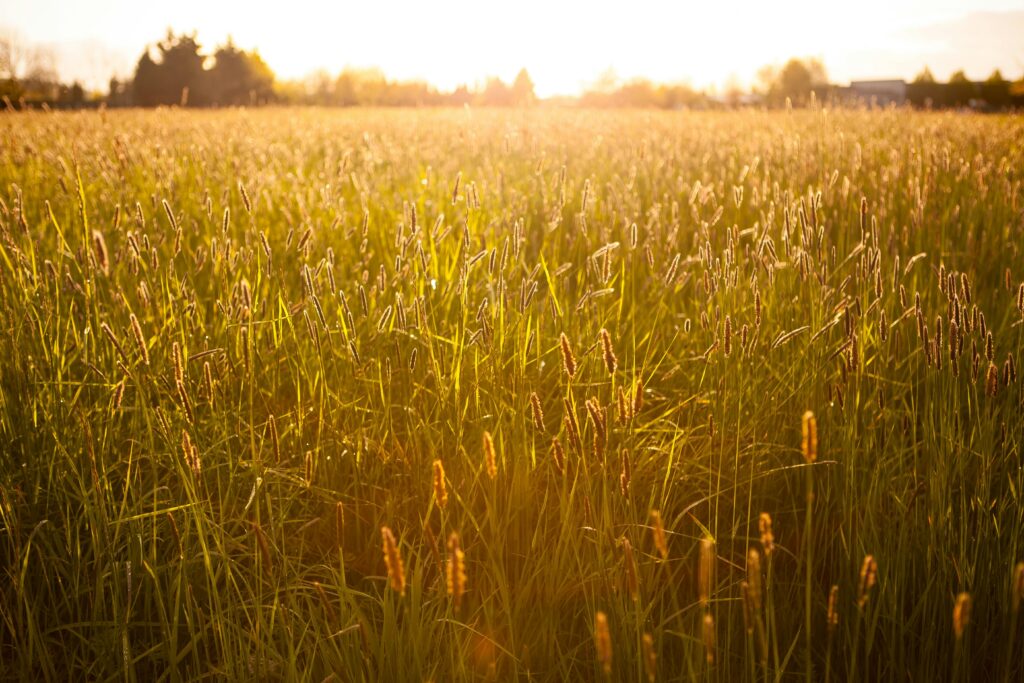
I have clear memories of moments in childhood and adolescence when I stood in the prairie grasses of my family’s land and looked out onto a horizon that was often crossed by geese flying in formation, cattle grazing in silhouette, or layers of thin clouds reflecting the rays of the rising and setting sun. These were the palpable moments in which I encountered the Logos and its power to sustain me through the experience of repeated trauma that was my lot at the time. As many times as I sank under the weight of the unbearable, the Earth responded with support and steady presence that nurtured my spirit until I could come to a place – decades later – where I know that it was the unflinching embrace of the natural world that held my healing and recovery. My theological studies gave me a vocabulary to describe this experience as profound encounter with the Logos. Yet the moment I try to describe it, I am instantly aware of the limitations of language. As one whose life revolves around words, I have come to an irony: the living Word leaves me wordless in its presence. This is not the malignant silence imposed by patriarchal egocentrism that is frightened of the power of words from those whom it is oppressing. The Logos, the wordless Word of perpetual creation, leaves the soul awestruck by its Truth.
This Truth is healing and sustaining to the afflicted, but it is also uncomfortable and unsettling when we are overly self-assured of the rightness of our way. The Word will overturn the tables in our temples, whether they be our inner sanctuaries or our outer structures of institution and tradition — or both. I always prefer peace over upheaval, but I have learned that chaos gives way to order in the end, an order that is freshly rearranged to sustain new insights and ways of being.
I have never thought of myself as any kind of iconoclast, yet I cannot ignore the stirrings of the Logos as I perceive them. I am aware that traditions and rituals serve a purpose to help us remember who we are and what is important to us. Scriptures such as those of the Bible have depth and value, yet they have been used against not only me personally, but women as a whole, people of color, Indigenous peoples, and the natural world. These oppressions are signs of disconnect with the Logos and the misappropriation of ancient worldviews in the service of power and domination. The words of the Bible are meant to engage and challenge us, and indeed they do, yet we have too often misunderstood the task. Rather than wrestle with the complexities of ancient narratives, we settle for that which is simplistic — and lifeless.
My daily walks in nature are still vital to my own reflections on how the living Logos invites me –and all of us — into deeper connection with the inner self, with every other sentient being that inhabits our planet, and the Earth itself. The living Logos, the wordless Word, beckons us into creative participation in the world. Its beauty and its boundlessness show us the way to break out of our self-imposed limitations to flourish in our shared life within it.


Personally I have had the privilege of walking with the author on her incredible journey. This article touches on the incredible way in which every person can experience the Holy during her/his life journey. As always I offer my thanks and insights brought to me by the author.