I have always believed that after I die I will find myself on the edge of a wide meadow with a gentle breeze rippling the long grass. And in the middle of the meadow will be Shep, splendid as in his youth, his coat grown rich with the patience of eternity. To him the forty-year wait will have felt like nothing. I have come, that is all. And I will move, as in a trance, toward him, toward his love, knowing that this is paradise, a reward I never thought I merited. I will give him a long hug (what is long in eternity?) and he will lick my face. We will be filled with joy, both arrived to our still point. Only later will I notice that there are no human beings in this paradise and, though it will take some time, I will come to understand that this other world, created by my dog’s unwavering love, is both my reward and my punishment. Just Shep and me..
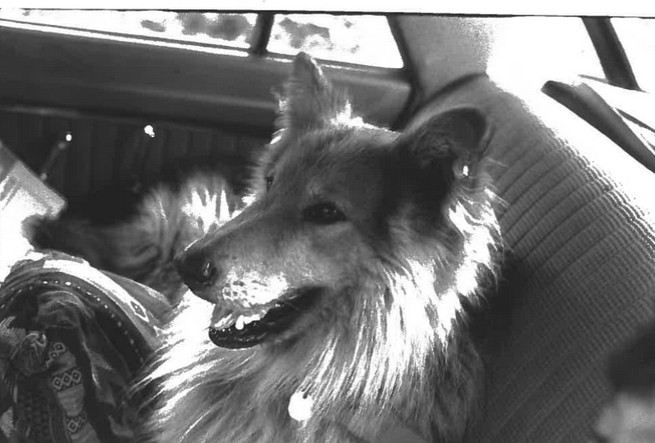
We had gone looking for a horse the day we found him. The horse was a small filly with a nice, clipped gait, and the price was fine. But in truth we were about to have a baby and about to move to the Midwest, so the idea of hauling a horse along with us was simply a dream. We praised the horse but explained that we simply could not buy her. The relaxed Downeaster said: “Well what about that dog there? You can have him for free!” The longhaired shepherd mix was tied to a kennel a hundred yards away, but the moment the talk turned to him, he perked up his young ears and stared right at me, as if he had found his destiny. And it turned out he had. So our son, born a week later, had himself a loyal older brother.
When my wife moved out three years later for a man who loved her (and who could blame her), she left the dog with me. It couldn’t have been otherwise. But a year later a crisis occurred: I was offered a Fulbright to Portugal and couldn’t take my enormous dog along. I had to find a dog-sitter. After advertising and asking around, I heard from a family, a young husband and wife, with two kids. They already had a poodle but were happy to add Shep to their ménage. The little children loved him immediately and even the elegant poodle accepted with ostensible equanimity this shaggy, somewhat uncouth stranger. And so, with a final stroking of his head and a rubbing of noses, with a benediction, I abandoned for a year the being who loved me most in the world.
When I came back, my friends told me how happy the family had been with Shep, how well he had fitted in. When I called them up, they spoke of him with great affection and pleaded with me to let them keep him. With my colleagues and neighbors advising that he would be better off with a real family, a real home, and still exhausted from jetlag, I gave in. But despite the jetlag I could hardly sleep that night. And as soon as it was a decent hour of the morning, I called to apologize, saying I had made a big mistake and that I had changed my mind and was coming to reclaim my dog. They were very disappointed, perhaps even bitter, but they couldn’t deny me. They said he was so happy with them they were sure he wouldn’t even remember me.
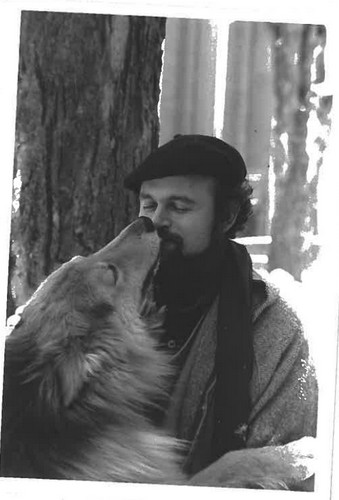
When I pulled into their driveway, they were gathered in gloom in front of the picture-perfect house. The husband was so angry he disappeared inside as soon as I arrived. The others remained gathered round Shep, their fingers tangled in his heavy fur, the mother, the two little children. What happened next revealed the utter ruthlessness of love itself. Seeing me, Shep bounded forward, leapt through the open window of my Valiant, settled in the back seat and turned his head away from the foster home where they had treated him like a prince for almost a year. He sat face averted till we drove away. He never looked back. The cruelty of total devotion.
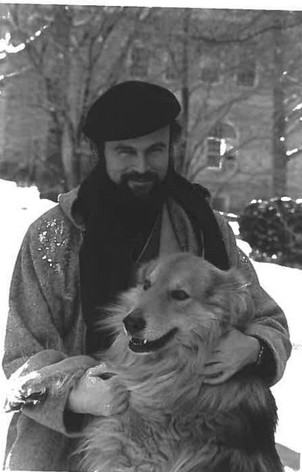
He followed me everywhere. He attended every class I taught until, in his last year, his rheumatism got so bad he couldn’t mount the stairs to the classroom. He never learned a thing, but he didn’t need to. What he needed to know he already knew. He was so beautiful that although dogs were not allowed in the building, no one ever complained. Even my students could sense that he was my better half. He smelled as rich as the earth. He was utterly himself.
One summer day, I was driving back from an afternoon at Split Rock, a place with a broad swimming hole, waterfalls, and a cliff from which the bravest of the adolescent brave would throw themselves into a small, black pool fifty feet below. The car was crammed full: the oldest kid in front, the rest all sprawled in the back with Shep. As usual, I was speeding, and this time I got caught.
“Do you know how fast you were going, fella,” said the trooper.
“Yessir,” I mumbled. “I was up a bit over the limit, sir.”
“You sure were buddy.” He looked us all over, asked for my license and registration, looked them over, then handed them back.
“All these kids yours,” he asked.
“No sir, just one of them.”
“And that dog there in the back. Is that your dog.”
“Yessir, it sure is.”
“Well, I’ll tell you what. There’s no way I’m going to give a ticket to someone with a dog that beautiful.” He paused. “But, you know what, fella, better slow down a bit.”
“I will sir, I will. Thanks a lot.”
So Shep had saved me at least a hundred bucks. And had brought kindness from a state trooper.
One summer, as I did research in Portugal, I left my house rent-free to a student hairdresser in exchange for dog-sitting. When I got back, I couldn’t recognize the creature standing beside her. He looked like a lion. She had given him a first-class coiffure, had washed him all over, then blown dried him to perfection. He was twice the size he had been when I lived with him before her advent. I wonder now if that is what he will look like when I meet him in the meadow with its eternal waving grasses.
Finally, he was an old dog. The last two years were sad. We would go on a walk in the woods, but coming back he would drag his hind legs. There came a time when he could no longer struggle to his feet. I called the vet and she said she would come. Half an hour later I called to say I couldn’t do it. She advised giving him some aspirin to combat the pain. It seemed to help. By then he had bed sores and they were open and angry. I rubbed on ointments, but I knew nothing would help. The newspapers beneath him were sodden with urine and I threw them out and spread another day’s provincial news underneath his emaciated body. His last day I gave him yet another can of his favorite dogfood and he gobbled it down. But as the night deepened, his breathing got shallower and shallower. Each breath came more slowly. Then finally he breathed in one last time and never breathed out. An hour later his ear was still smooth as silk, soft as a breath of air. But now it was cold. And there is nothing more to be said.
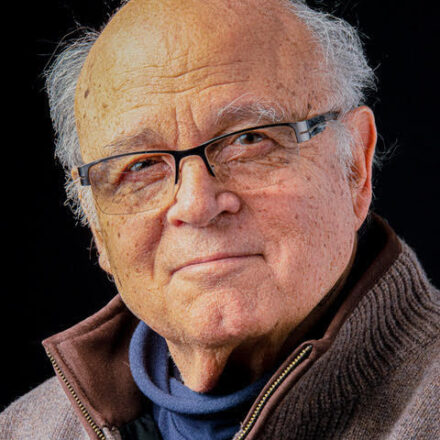
I’m an old man now. Shep has been dead for thirty years. When I die I might find nothing at all. But if God is love, as we like to assume, I trust He will give me this grace in a meadow of waving grain, this lovely creature, utterly himself, staring into my eyes, offering everything he has, as he always did from the moment we met. Human relations are fraught. I was never man enough to balance aspiration and reality, the dream and the quotidian, as one must living with another human being. But I was man enough to recognize that if love is the measure, then Shep, beyond any doubt, was a better creature than I. And, whether that meadow exists or not, I know that I have been blessed by our encounter in this beautiful, mysterious, possibly meaningless, universe.